 BRAINCAKE
Single Slit Diffraction
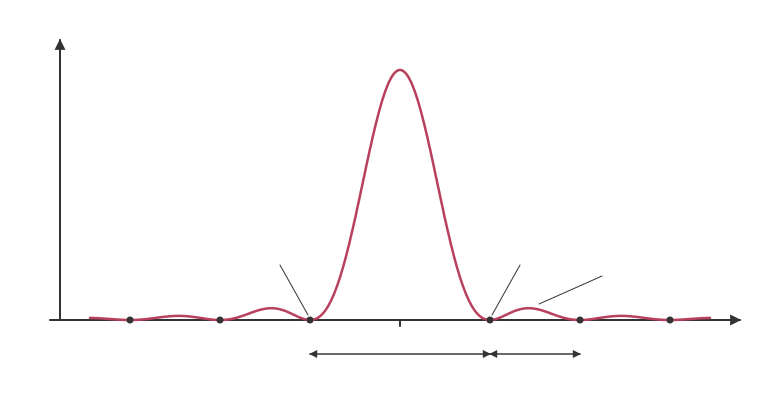
When monochromatic light (light of a single wavelength, for example from a laser) passes through a single narrow slit, it diffracts and produces a pattern of bright and dark fringes on a screen.
The pattern has a wide, bright central maximum, with narrower, dimmer maxima on either side separated by dark minima. The central maximum is twice as wide as each of the other maxima, and it is much more intense. The intensity of the side maxima decreases with distance from the centre.
Sign in free to see the rest of this lesson, the R.E.C.I.P.E. recall steps and the quiz
BrainCake is free. Make an account in seconds and pick up where this page stops.
More in Waves
- Speed and Frequency of Waves on a Stretched String
- Investigating the Factors Affecting Fundamental Frequency
- Fundamental Frequency
- Diffraction
- Factors Affecting Diffraction
- The Diffraction Grating
- Investigating Diffraction with a Laser
- Two Slit Interference
All 22 lessons in Waves · All Edexcel AS-level Physics topics