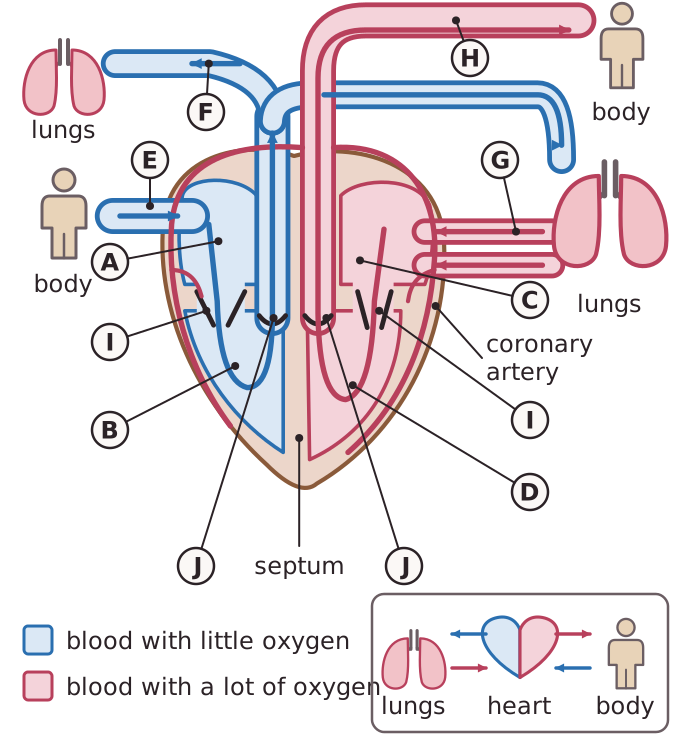
The heart is a muscular pump with two sides, and the body has a double circulation. The right side pumps deoxygenated blood to the lungs, and the left side pumps oxygenated blood to the rest of the body. Blood passes through the heart twice on each complete circuit.
Deoxygenated blood from the body returns through the vena cava into the right atrium. It passes into the right ventricle, which pumps it to the lungs through the pulmonary artery. Oxygenated blood comes back from the lungs in the pulmonary vein into the left atrium, passes into the left ventricle, and is pumped out round the body through the aorta. The heart muscle has its own blood supply from the coronary arteries.
The atria have thin walls because they only push blood into the ventricles. The ventricles have thicker walls because they pump blood out of the heart. The wall of the left ventricle is thicker than that of the right, because it pumps blood at higher pressure over a longer distance, to the whole body. The right ventricle only sends blood to the nearby lungs, where a lower pressure avoids damaging the delicate capillaries. Valves between the atria and ventricles, and in the arteries leaving the heart, make sure blood flows in one direction only.