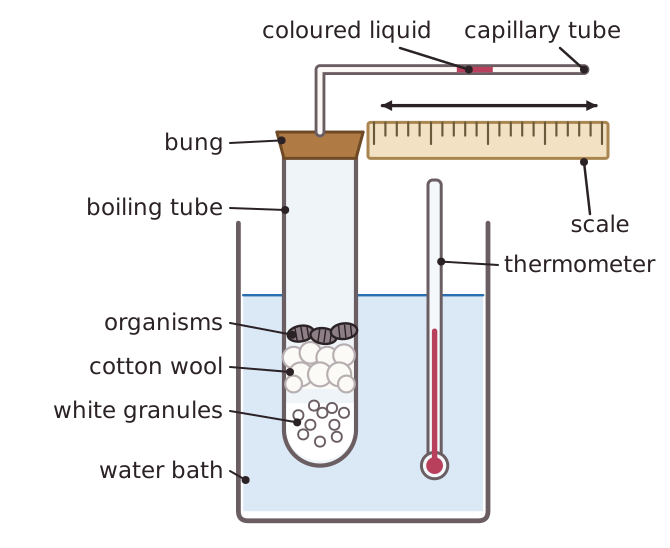
You can measure the rate of respiration in small organisms, such as woodlice, maggots or germinating peas, using a respirometer. The organisms sit in a boiling tube, separated by cotton wool from a layer of soda lime. The tube is sealed with a bung that holds a capillary tube leading to a drop of coloured liquid.
The organisms respire aerobically, taking in oxygen and giving out carbon dioxide. The soda lime absorbs the carbon dioxide, so the gas volume in the tube falls as oxygen is used up. The pressure drops and the coloured liquid moves along the capillary tube towards the organisms. The rate of respiration is the distance moved by the liquid divided by the time taken.
To investigate temperature, stand the tube in a water bath and leave it for a few minutes to reach the temperature before starting. Repeat at several temperatures. Keep the other variables the same: the type and mass of organisms, the time and the apparatus. Repeat each temperature and calculate a mean. Respiration usually speeds up as temperature rises, because enzymes work faster, until they become too hot and denature.
Safety and ethics: soda lime irritates skin and eyes, so wear eye protection. Handle animals gently, keep them in the tube only briefly and return them to their habitat afterwards.