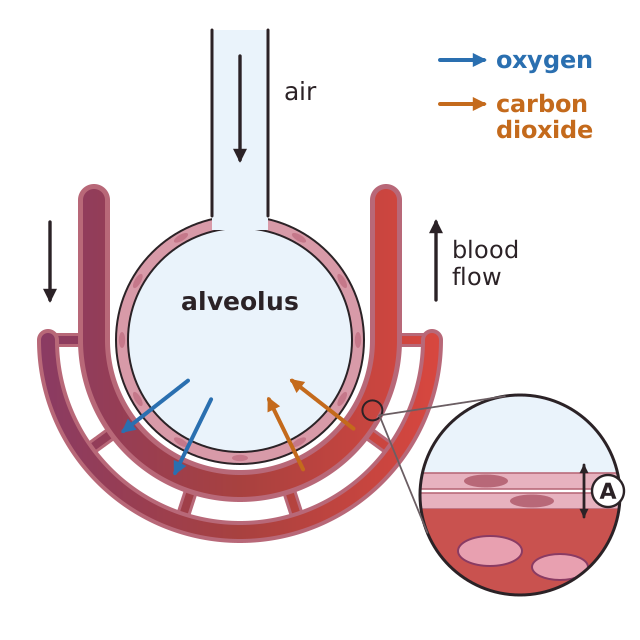
Gas exchange happens in millions of tiny air sacs in the lungs called alveoli. Oxygen diffuses from the air in the alveoli, where its concentration is high, into the blood in the capillaries around them, where its concentration is low. Carbon dioxide diffuses the other way, from the blood into the air in the alveoli, and is removed when we breathe out.
Alveoli are adapted so that diffusion is fast. There are huge numbers of them, which gives a very large surface area. Their walls are only one cell thick, and so are the walls of the capillaries, so the diffusion distance is short. Each alveolus is surrounded by a dense network of capillaries, and the blood flowing through keeps carrying oxygen away and bringing more carbon dioxide, so the concentration gradient stays steep.
Breathing also helps. Each breath brings fresh air into the alveoli, which keeps the concentration of oxygen high there and the concentration of carbon dioxide low. During exercise we breathe faster and deeper, so the concentration gradients stay steep even when the body needs more oxygen.