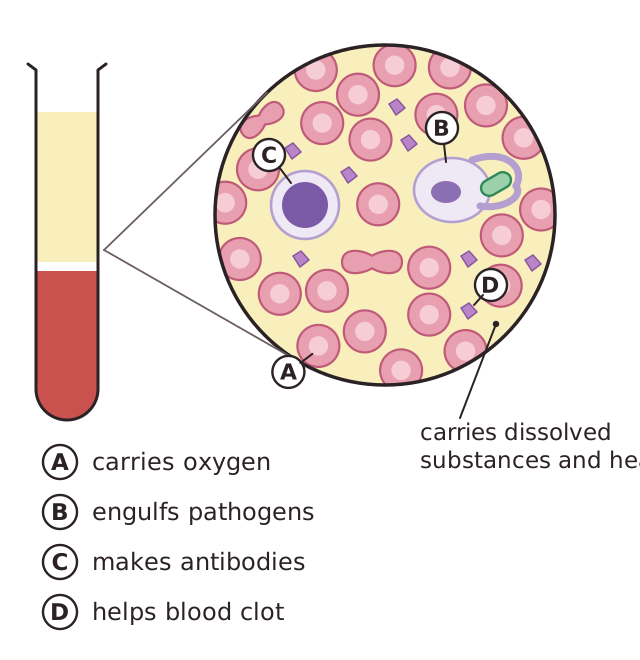
Blood is a tissue made of plasma, red blood cells, white blood cells and platelets, and each part has a structure that suits its job.
Red blood cells (erythrocytes) carry oxygen. They contain the red pigment haemoglobin, which joins with oxygen in the lungs to form oxyhaemoglobin and releases it again in the body tissues. They are biconcave discs, which gives a large surface area for absorbing oxygen, and they have no nucleus, which leaves more room for haemoglobin.
White blood cells defend the body against pathogens. Phagocytes engulf pathogens and digest them. Lymphocytes produce antibodies that target a particular pathogen. Plasma is the pale yellow liquid part of the blood. It carries blood cells and dissolved substances such as glucose, amino acids, carbon dioxide, urea and hormones, and it also carries heat around the body. Platelets are small fragments of cells with no nucleus. They help the blood to clot at a wound, which stops blood loss and keeps microorganisms out.