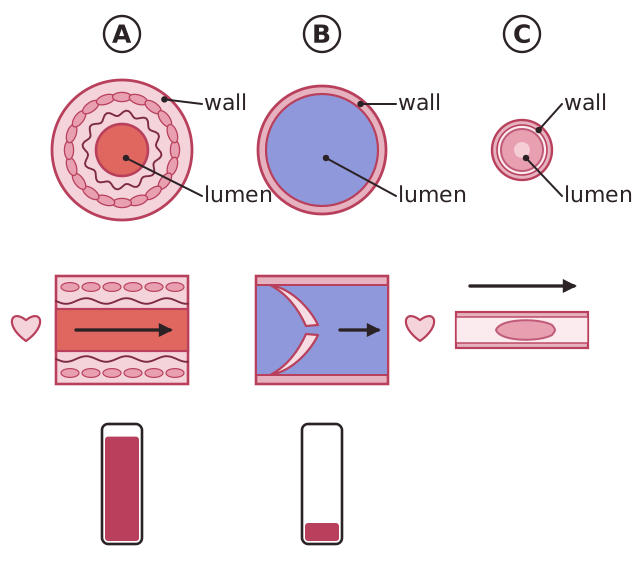
The blood travels around the body in three types of blood vessel, and the structure of each one suits its function.
Arteries carry blood away from the heart. The blood is at high pressure, so artery walls are thick and contain muscle and elastic fibres. The elastic fibres let the wall stretch as blood surges through and spring back afterwards. The lumen, the space in the middle, is relatively narrow.
Veins carry blood back to the heart at low pressure. Their walls are thinner and the lumen is wider, so blood flows more easily. Veins have valves that stop the blood flowing backwards. Capillaries are tiny vessels that run between the cells. Their walls are only one cell thick, which gives a short diffusion distance, so oxygen and dissolved food can pass out to the cells and carbon dioxide and urea can pass in.