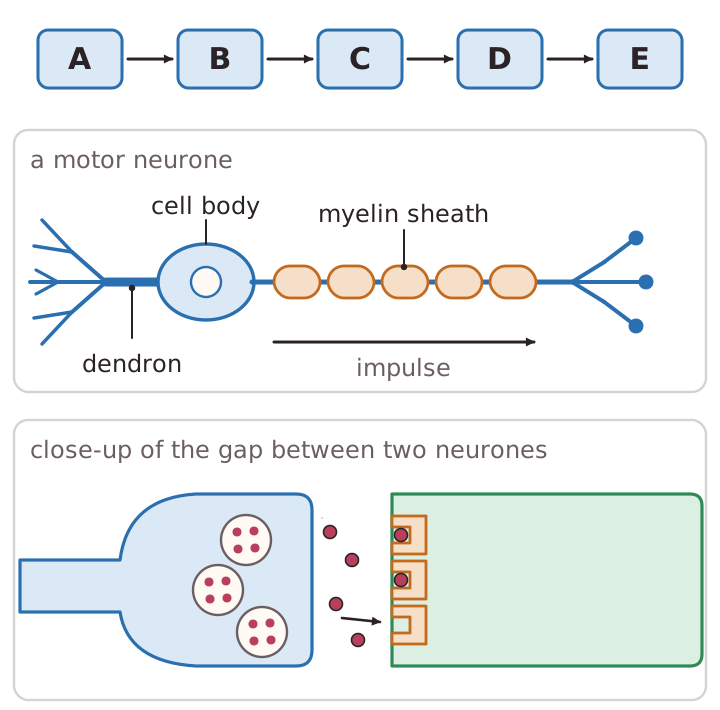
Sensory receptors detect a stimulus, such as light, pressure or a change in temperature, and produce an electrical impulse. A sensory neurone carries the impulse from the receptor to the central nervous system (CNS), which is the brain and spinal cord. Inside the CNS, a relay neurone passes the impulse on to a motor neurone, which carries it to an effector, a muscle or a gland.
A neurone is a long cell. The dendron carries impulses towards the cell body and the axon carries impulses away from the cell body. Many axons are covered in a myelin sheath, an insulating layer of fat that speeds up the impulse.
Neurones do not touch. Between two neurones there is a tiny gap called a synapse. The electrical impulse cannot cross the gap. Instead, when the impulse reaches the end of the first neurone, it releases a chemical called a neurotransmitter. The neurotransmitter molecules diffuse across the gap and bind to receptors on the next neurone. This triggers a new electrical impulse in the next neurone.
The neurotransmitter is released from one side only, so impulses can pass across a synapse in only one direction.