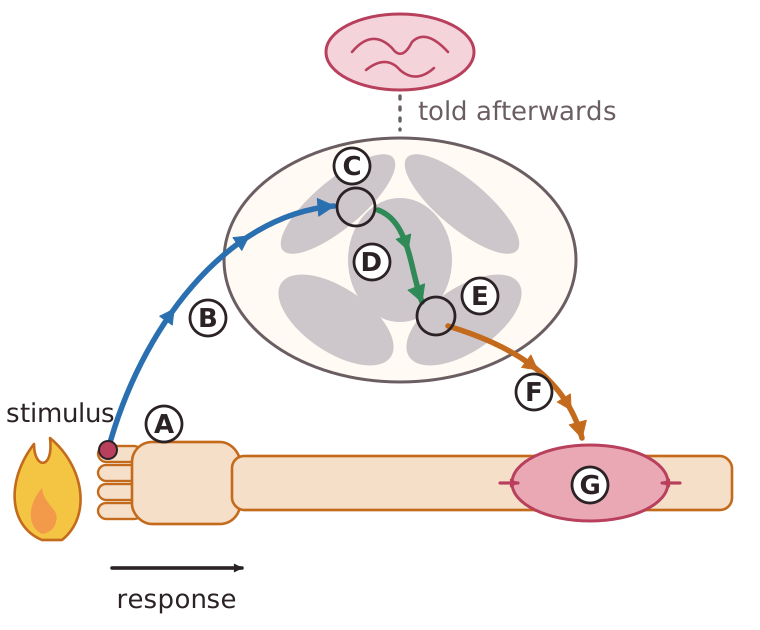
A reflex action is a fast, automatic response to a stimulus. It does not involve conscious thought. Reflexes protect the body from harm, for example pulling your hand away from something hot or blinking when something comes near your eye.
The pathway is called a reflex arc. The stimulus is detected by a receptor. A sensory neurone carries the impulse to the CNS, where it passes across a synapse to a relay neurone in the spinal cord. The relay neurone passes the impulse across another synapse to a motor neurone, which carries it to an effector, usually a muscle. The effector produces the response.
The reflex is fast because the route is short and the brain is not involved in deciding the response. The brain is told afterwards, which is why you may feel pain after your hand has already moved.
In calculations, an estimate is useful when an exact value is not needed or cannot be measured, and for checking that a calculated answer is sensible. For example, to estimate 4.8 × 10.2, round the numbers to 5 × 10 = 50.