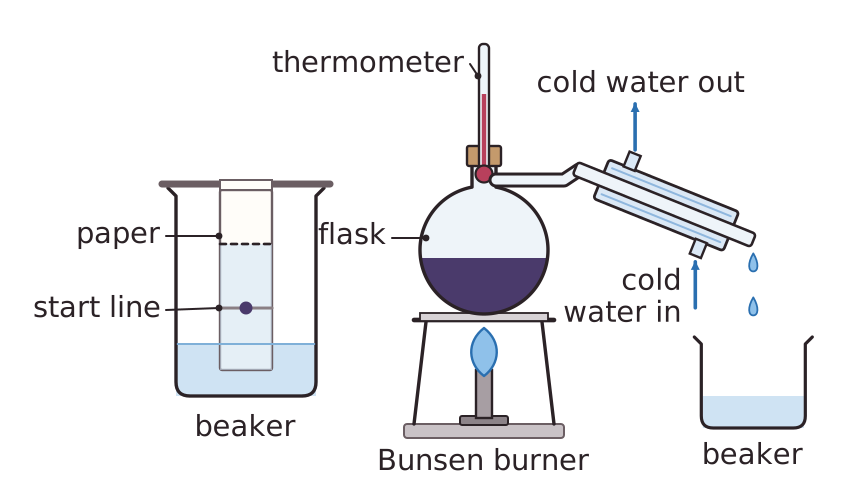
This core practical has two parts, and both use ink. In the first part you use paper chromatography to find out which dyes are in the ink. Draw a start line near the bottom of a piece of chromatography paper in pencil, because pencil does not dissolve in the solvent. Put a small spot of ink on the line. Stand the paper in a beaker with a little water, which is the solvent, so that the water level is below the pencil line. If the spot were under the water, the ink would dissolve into the beaker instead of travelling up the paper.
The solvent soaks up the paper and carries the dyes in the ink with it. Dyes that are more soluble in the solvent move further up the paper, so different dyes end up in different places. Take the paper out before the solvent reaches the top and mark where it got to. One spot on the chromatogram means one pure dye. Several spots mean the ink is a mixture of dyes.
In the second part you use simple distillation to separate pure water from the ink. Heat the ink in a flask with a Bunsen burner. The water boils and turns into vapour, but the dyes do not boil off and stay in the flask. The vapour passes into a condenser, which is kept cool by cold water, and it turns back into liquid by condensing. The pure water drips into a beaker. Wear eye protection, stand the Bunsen burner on a heatproof mat, and take care with hot glassware and hot liquids.