 BRAINCAKE
Condensation Polymers - Polyamides
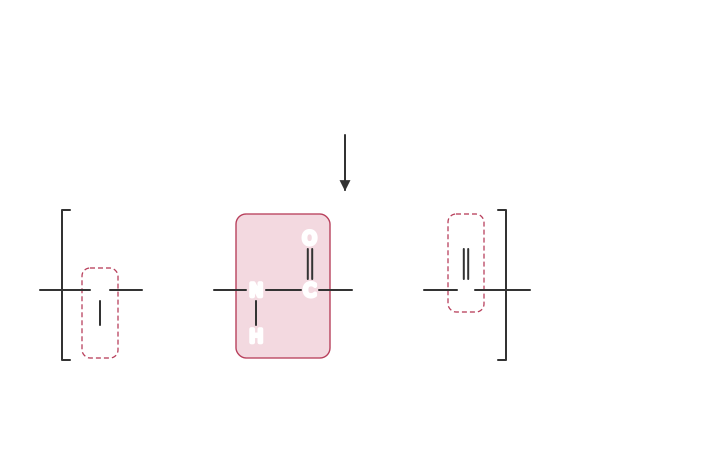
Polyamides are condensation polymers in which the monomers are joined by amide links, -CONH-. They are made from two types of monomer: a diamine (two -NH2 groups) and a dicarboxylic acid (two -COOH groups). Each time an amine group reacts with a carboxylic acid group, an amide link forms and a molecule of water is eliminated. A diacyl chloride can be used instead of the acid, in which case HCl is eliminated and the reaction is faster.
Nylon-6,6 is made from hexane-1,6-diamine, H2N(CH2)6NH2, and hexanedioic acid, HOOC(CH2)4COOH. The name shows that each monomer has six carbon atoms.
Sign in free to see the rest of this lesson, the R.E.C.I.P.E. recall steps and the quiz
BrainCake is free. Make an account in seconds and pick up where this page stops.
More in Amines, Amides, Amino Acids and Proteins
- Preparation of Phenylamine
- Reactions of Amines with Acids and Acyl Chlorides
- Reactions of Amines with Copper(II) Ions
- Amides
- Amino Acids
- Zwitterions and Isoelectric Points
- Peptides and Proteins
- Chromatography of Amino Acids
All 12 lessons in Amines, Amides, Amino Acids and Proteins · All Edexcel A-level Chemistry topics