 BRAINCAKE
Triglycerides
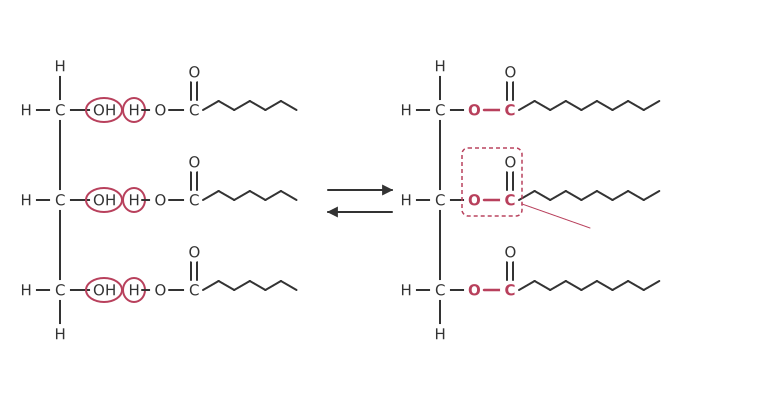
A triglyceride is made of one glycerol molecule joined to three fatty acids. Fats and oils are triglycerides.
Each fatty acid joins to one of the three –OH groups of glycerol in a condensation reaction. The –OH of glycerol reacts with the –COOH of the fatty acid, a molecule of water is released, and an ester bond forms. Three fatty acids give three ester bonds and release three water molecules:
glycerol + 3 fatty acids → triglyceride + 3 H2O
Sign in free to see the rest of this lesson, the R.E.C.I.P.E. recall steps and the quiz
BrainCake is free. Make an account in seconds and pick up where this page stops.
Key terms in this lesson
- lipase
- An enzyme that hydrolyses the ester bonds in triglycerides (lipids), releasing fatty acids and glycerol.
More in Biological Molecules
- Glycogen
- Cellulose
- The Nature of Lipids
- Fatty Acids and Glycerol
- Phospholipids
- Unit Membrane
- Test for Lipids
- Amino-acids
All 25 lessons in Biological Molecules · All Edexcel AS-level Biology topics