 BRAINCAKE
Unit Membrane
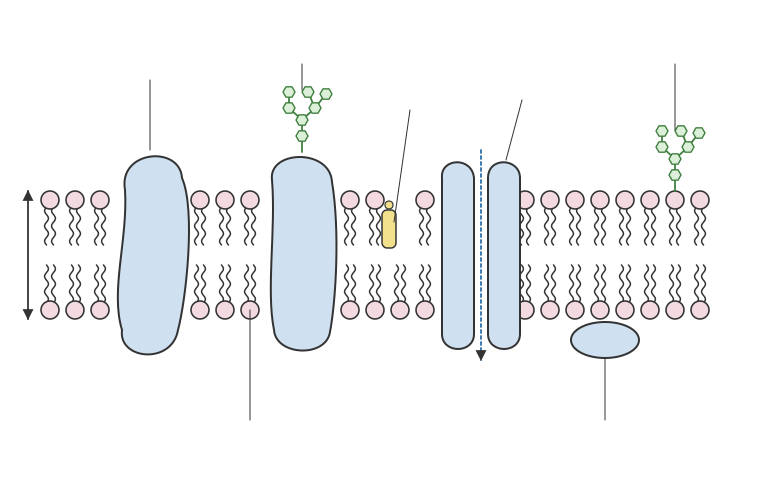
Every cell is surrounded by a cell surface membrane, and eukaryotic cells also have membranes around organelles. Under the electron microscope, all these membranes look the same: two dark lines separated by a lighter band, with a total thickness of about 7 nm. Because this three-layered appearance is found in every membrane, it was called the unit membrane.
The dark lines are the hydrophilic phosphate heads of phospholipids, and the light band is the hydrophobic fatty acid tails. So the unit membrane is a phospholipid bilayer: the heads face the watery cytoplasm on one side and the watery tissue fluid on the other, and the tails face inwards.
Sign in free to see the rest of this lesson, the R.E.C.I.P.E. recall steps and the quiz
BrainCake is free. Make an account in seconds and pick up where this page stops.
Key terms in this lesson
- cholesterol
- A steroid lipid found in cell membranes, mainly of animal cells, that regulates their fluidity and is a precursor of steroid hormones.
- hydrophilic
- Attracted to water; describes polar or charged groups or molecules that can form hydrogen bonds with water.
More in Biological Molecules
- The Nature of Lipids
- Fatty Acids and Glycerol
- Triglycerides
- Phospholipids
- Test for Lipids
- Amino-acids
- Hydrogen Bonding
- Disulfide Bridges
All 25 lessons in Biological Molecules · All Edexcel AS-level Biology topics