 BRAINCAKE
Fatty Acids and Glycerol
Triglycerides and phospholipids are built from two kinds of smaller molecule: glycerol and fatty acids.
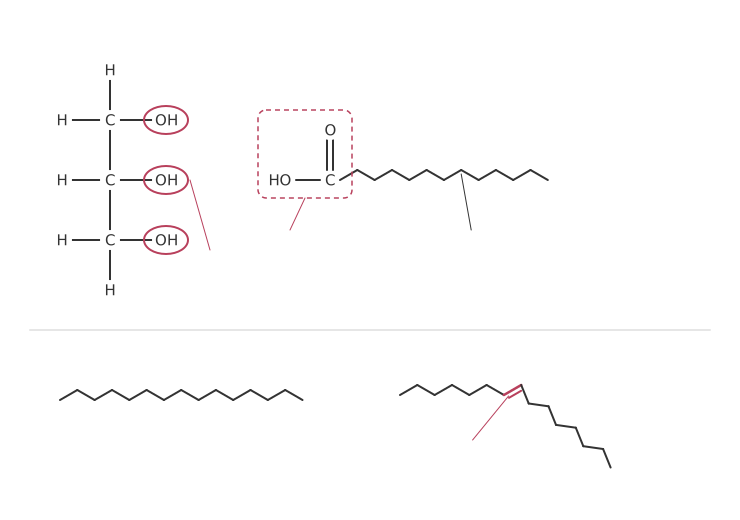
Glycerol (propane-1,2,3-triol, C3H8O3) is a small alcohol with three carbon atoms, each carrying an –OH (hydroxyl) group. These three –OH groups are where fatty acids attach.
A fatty acid has a carboxyl group (–COOH) at one end attached to a long hydrocarbon chain, usually 14 to 22 carbon atoms long. It is often written as R–COOH, where R is the hydrocarbon tail. The carboxyl group is what reacts with glycerol; the tail is non-polar and hydrophobic.
Sign in free to see the rest of this lesson, the R.E.C.I.P.E. recall steps and the quiz
BrainCake is free. Make an account in seconds and pick up where this page stops.
Key terms in this lesson
- hydrophobic
- Repelled by water; describes non-polar groups or molecules that cannot form hydrogen bonds with water.
More in Biological Molecules
- Test for Starch
- Glycogen
- Cellulose
- The Nature of Lipids
- Triglycerides
- Phospholipids
- Unit Membrane
- Test for Lipids
All 25 lessons in Biological Molecules · All Edexcel AS-level Biology topics