 BRAINCAKE
Cellulose
Cellulose is a structural polysaccharide and the main component of plant cell walls. It is the most abundant organic molecule on Earth.
Cellulose is a polymer of β-glucose joined by 1,4-glycosidic bonds. In β-glucose the –OH on carbon 1 is above the ring, so to form each bond every other glucose unit must be rotated 180°. As a result the chain is straight and unbranched, not coiled like amylose.
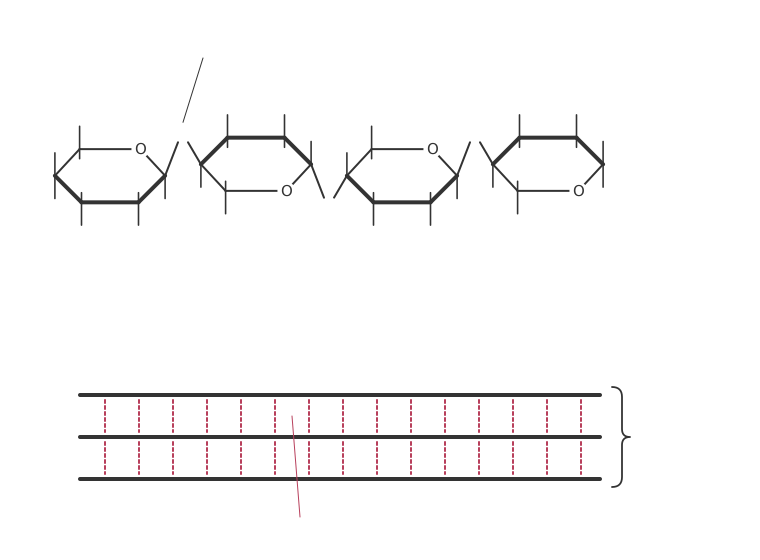
Sign in free to see the rest of this lesson, the R.E.C.I.P.E. recall steps and the quiz
BrainCake is free. Make an account in seconds and pick up where this page stops.
Key terms in this lesson
- tensile strength
- The ability of a material to withstand a pulling or stretching force without breaking.
More in Biological Molecules
- Polysaccharides
- Starch
- Test for Starch
- Glycogen
- The Nature of Lipids
- Fatty Acids and Glycerol
- Triglycerides
- Phospholipids
All 25 lessons in Biological Molecules · All Edexcel AS-level Biology topics