 BRAINCAKE
Lugworm
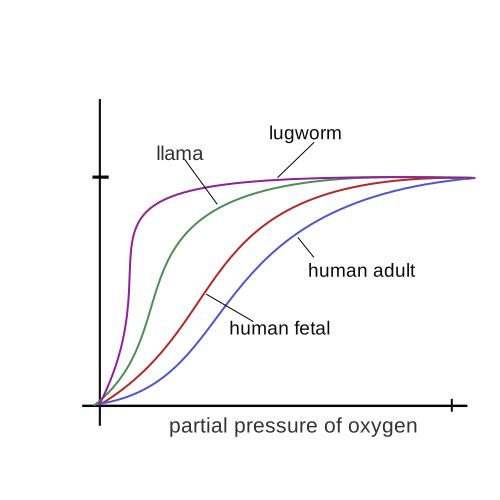
Haemoglobin from the marine invertebrate Arenicola marina (lugworm) is a large protein complex that can carry up to 156 oxygen molecules.
Lugworms live on the sea shore. They are not very active and spend most of their time in their burrows covered by sea water.
The primary function of lugworm haemoglobin is oxygen transport at high tide.
Sign in free to see the rest of this lesson, the R.E.C.I.P.E. recall steps and the quiz
BrainCake is free. Make an account in seconds and pick up where this page stops.
Key terms in this lesson
- haemoglobin
- A globular, quaternary protein in red blood cells, made of four polypeptide chains each with a haem group, that binds and transports oxygen.
- positive cooperativity
- The change in shape of haemoglobin caused by the binding of one oxygen molecule that makes it easier for further oxygen molecules to bind.
More in Mass Transport in Animals
- Different Types of Haemoglobin
- Oxygen Dissociation Curve
- Effect of Carbon Dioxide
- Transport of Oxygen
- Llama
- Fetal Haemoglobin
- Myoglobin
- The Need for a Transport System
All 27 lessons in Mass Transport in Animals · All AQA AS-level Biology topics