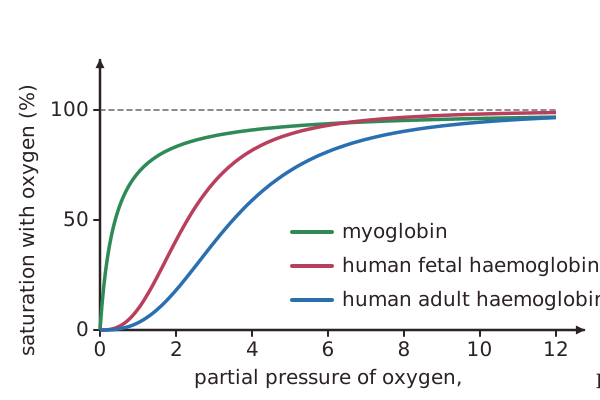
Myoglobin is similar to haemoglobin but only has one polypeptide chain compared to four polypeptide chains in haemoglobin.It is found in the cardiac and skeletal muscles in almost all mammals.It has a haem prosthetic group containing iron which can bind oxygen. Its heme group is identical to those in haemoglobin but it has a higher affinity for oxygen than does haemoglobin. It does not have cooperative binding with oxygen because it has only one polypeptide chain.Its function is to store oxygen and supply oxygen to the muscles when the partial pressure is low.Myoglobin is found in the bloodstream only after muscle injury.High concentrations of myoglobin in muscle cells allow organisms to hold their breath for a longer period of time. Diving mammals such as whales and seals have muscles with a particularly high abundance of myoglobin.