 BRAINCAKE
Haemoglobin
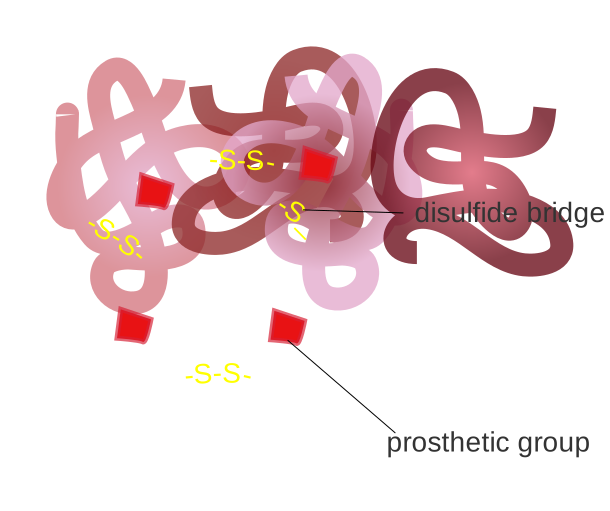
Haemoglobin is a protein that binds oxygen when there is lots of oxygen available and releases oxygen when there is a low partial pressure of oxygen.
Many different organisms have different haemoglobins which differ in structure and their affinity for oxygen.
Sign in free to see the rest of this lesson, the R.E.C.I.P.E. recall steps and the quiz
BrainCake is free. Make an account in seconds and pick up where this page stops.
Key terms in this lesson
- quaternary structure
- The structure formed when two or more polypeptide chains, and sometimes a non-protein prosthetic group, are held together to form a functional protein.
- disulfide bridge
- A strong covalent bond formed between two sulfhydryl (-SH) groups of cysteine residues in a polypeptide.
More in Mass Transport in Animals
- Loading and Unloading Oxygen
- Different Types of Haemoglobin
- Oxygen Dissociation Curve
- Effect of Carbon Dioxide
- Transport of Oxygen
- Lugworm
- Llama
- Fetal Haemoglobin
All 27 lessons in Mass Transport in Animals · All AQA AS-level Biology topics