 BRAINCAKE
Substrate Level Phosphorylation
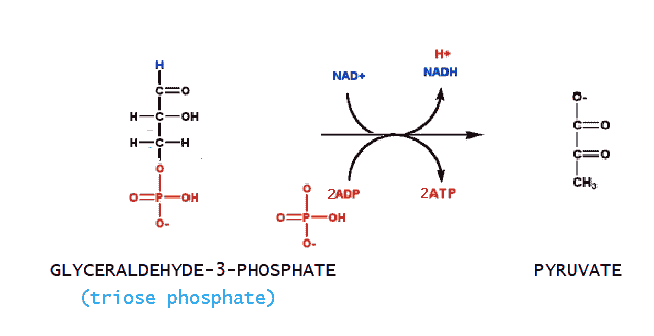
Substrate-level phosphorylation is the formation of ATP without the involvement of the electron transport chain. A phosphate group is added to each molecule of triose phosphate using inorganic phosphate from the cytoplasm. This forms two triose bisphosphate molecules. After a series of steps ATP is generated from the removal of the phosphate groups from each of the triose bisphosphate molecules. NAD is reduced by the hydrogen atoms released.
Sign in free to see the rest of this lesson, the R.E.C.I.P.E. recall steps and the quiz
BrainCake is free. Make an account in seconds and pick up where this page stops.
Key terms in this lesson
- ATP
- Adenosine triphosphate, the universal energy currency of cells, which releases energy for cellular reactions when hydrolysed to ADP and inorganic phosphate.
- Glycolysis
- The first stage of respiration, occurring in the cytoplasm, in which glucose is split into two molecules of pyruvate with a net yield of ATP and reduced NAD.
- Electron transport chain
- A series of protein complexes and electron carriers in the inner mitochondrial (or thylakoid) membrane that pass electrons along in redox reactions, releasing energy used to pump protons across the membrane.
More in Respiration
- Energy from Glucose.
- Glycolysis
- Phosphorylation
- Lysis
- The Link Reaction
- The Krebs Cycle.
- oxidative phosphorylation
- ATP Synthase
All 12 lessons in Respiration · All OCR A-level Biology topics