 BRAINCAKE
Glycolysis
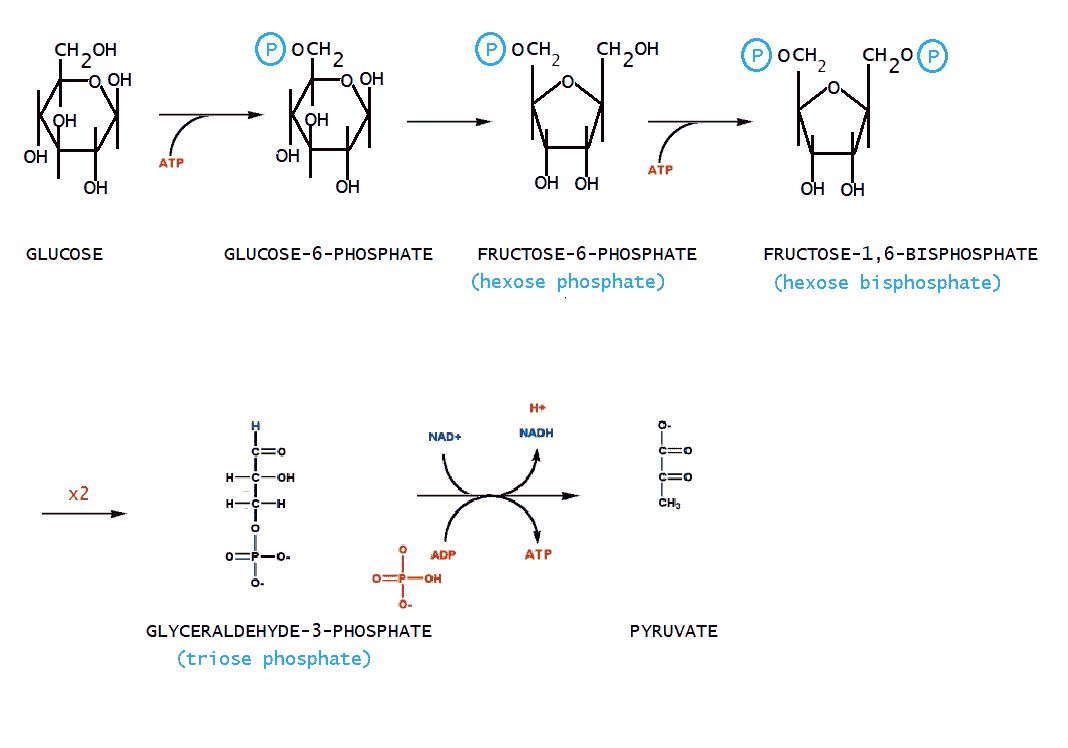
Glucose is phosphorylated using ATP to form glucose-6- phosphate. This keeps the glucose in the cell as it cannot exit through glucose transporters and commits the glucose molecule to glycolysis. Phosphorylation also makes the glucose more reactive.
Sign in free to see the rest of this lesson, the R.E.C.I.P.E. recall steps and the quiz
BrainCake is free. Make an account in seconds and pick up where this page stops.
Key terms in this lesson
- ATP
- Adenosine triphosphate, the universal energy currency of cells, which releases energy for cellular reactions when hydrolysed to ADP and inorganic phosphate.
More in Respiration
- Energy from Glucose.
- Phosphorylation
- Lysis
- Substrate Level Phosphorylation
- The Link Reaction
- The Krebs Cycle.
- oxidative phosphorylation
- ATP Synthase
All 12 lessons in Respiration · All OCR A-level Biology topics