Glycolysis can be considered to be divided into three main steps. The first is phosphorylation of the glucose molecule to make it more reactive, the second is lysis and the third substrate-level phosphorylation.Two molecules of ATP are used to phosphorylate glucose.Hexose bisphosphate is produced. This molecule is easier to break down than glucose.
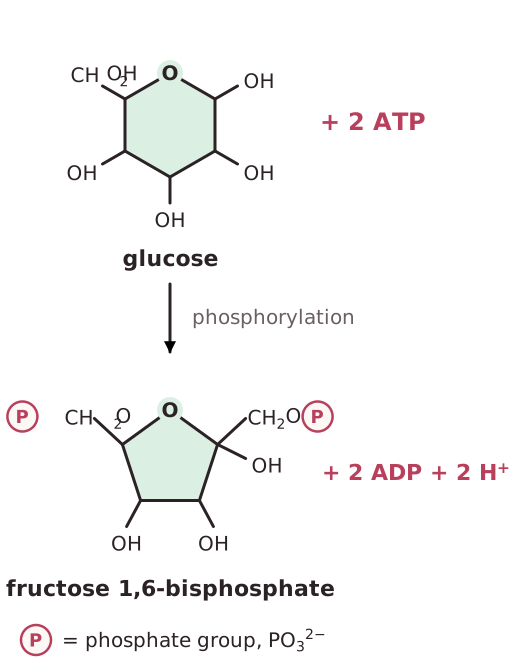
Phosphorylation
Read the text
Read the text and highlight anything you think is important. When you go on, the text is hidden and you answer from memory.
Specification: OCR Biology A (H420), A-level, 5.2.2 Respiration. Topic: Respiration.
Key terms in this lesson
- ATP
- Adenosine triphosphate, the universal energy currency of cells, which releases energy for cellular reactions when hydrolysed to ADP and inorganic phosphate.
- Glycolysis
- The first stage of respiration, occurring in the cytoplasm, in which glucose is split into two molecules of pyruvate with a net yield of ATP and reduced NAD.
More in Respiration
- Energy from Glucose.
- Glycolysis
- Lysis
- Substrate Level Phosphorylation
- The Link Reaction
- The Krebs Cycle.
- Oxidative Phosphorylation
- ATP Synthase
All 19 lessons in Respiration · All OCR A-level Biology topics