 BRAINCAKE
Transamination and Deamination
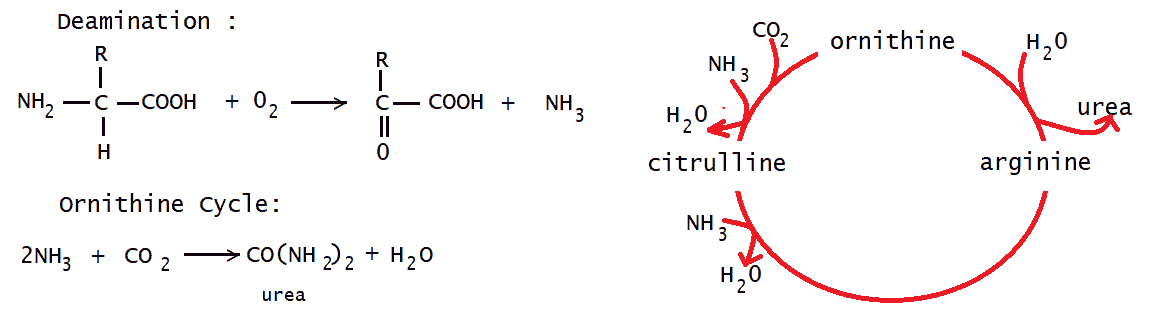
Of the twenty amino-acids required by the body nine cannot be synthesised by the body and must therefore be obtained from the diet. The others can be made by the liver from the nine essential amino-acids by transamination. Excess amino-acids cannot be stored by the body because the amine groups make them toxic. The liver deaminates amino-acids by reaction with molecular oxygen. The keto acid produced is used in respiration and ammonia, a toxic product of the reaction, reacts with carbon dioxide in the ornithine cycle to form urea.
Sign in free to see the rest of this lesson, the R.E.C.I.P.E. recall steps and the quiz
BrainCake is free. Make an account in seconds and pick up where this page stops.
More in Homeostasis
- Excretion
- The Liver
- Structure of the Liver
- Carbohydrate Metabolism in the Liver
- Detoxification
- Production of Bile Salts, Bile Pigments and Cholesterol
- The Kidneys
- Structure of the Kidney
All 33 lessons in Homeostasis · All OCR A-level Biology topics