Skip to content

Excretion

Excretion is the removal from the body of metabolic waste.The main metabolic waste products in mammals are
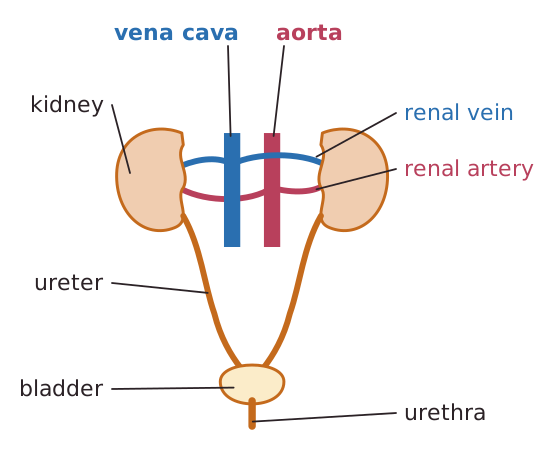
  • carbon dioxide from cellular respiration which is excreted from the lungs
  • bile pigments from the breakdown of haem from old red blood cells, which is released into the small intestine
  • urea - a nitrogenous waste product formed from carbon dioxide and ammonia from the breakdown of amino acids.

Read the text

Read the text and highlight anything you think is important. When you go on, the text is hidden and you answer from memory.

Specification: OCR Biology A (H420), A-level, 5.1.2 Excretion as an example of homeostatic control. Topic: Homeostasis.

Key terms in this lesson

Neurone
A specialised nerve cell adapted to transmit electrical impulses (nerve impulses) around the body.
Action potential
The temporary reversal of the electrical charge across an axon membrane, from about -70mV to +40mV, that occurs when a neurone is stimulated above threshold.
Resting potential
The difference in electrical charge across an axon membrane (about -70mV, inside negative relative to outside) when a neurone is not conducting an impulse.
Pacinian corpuscle
A mechanoreceptor found deep in the skin that detects mechanical pressure and generates a generator potential via stretch-mediated sodium channels.

More in Homeostasis

All 33 lessons in Homeostasis · All OCR A-level Biology topics