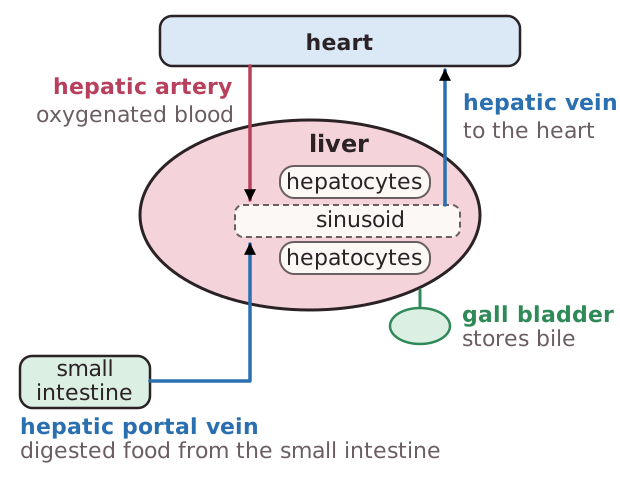
The liver is about 2% of body mass and is the largest internal organ in the body. It is one of the main organs involved in homeostasis, is metabolically very active, fast growing and can regenerate itself if over half is lost.The liver is supplied with oxygenated blood from the heart via the hepatic artery. About three-quarters of blood flowing into the liver comes directly from the small intestine. This blood contains the products of digestion and is brought to the liver via the hepatic portal vein. This blood mixes with oxygenated blood from the hepatic artery and comes in contact with liver cells (hepatocytes) to facilitate the exchange of substances between the hepatocytes and the blood. Blood returns to the heart via the hepatic vein.