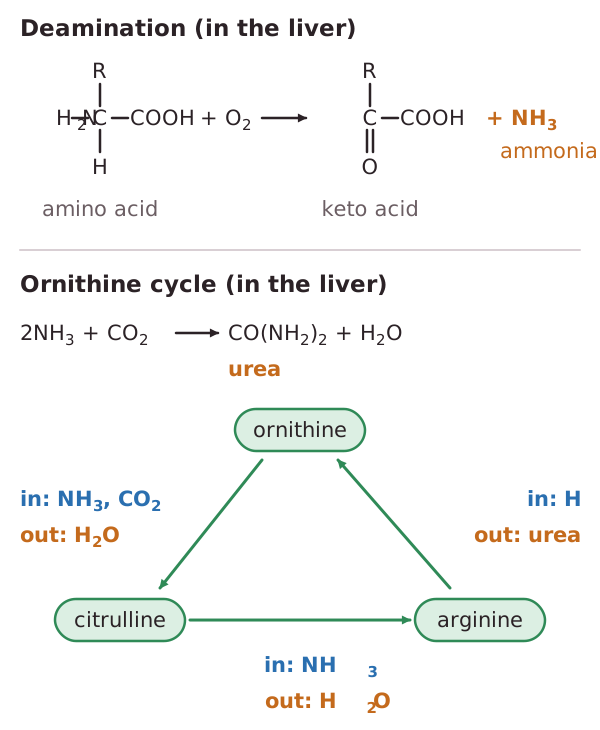
Toxins are produced by many metabolic pathways. Toxins are also ingested in food and drugs. The liver detoxifies most of these substances and makes them harmless.Hydrogen peroxide is broken down rapidly by catalase in the liver. Hydrogen peroxide is toxic to all cells and will oxidise proteins, cell membranes and DNA. Catalase uses hydrogen peroxide to oxidise toxic substances. The hydrogen peroxide is converted to water in the process. Excess hydrogen peroxide is converted to oxygen and water at the rate of about 5 million molecules per second.Alcohol dehydrogenase in hepatocytes oxidises ethanol to ethanal, and ethanal dehydrogenase then oxidises ethanal to ethanoic acid. Both enzymes use NAD. The ethanoate is used in fatty acids synthesis or in respiration.