 BRAINCAKE
Feedback Systems
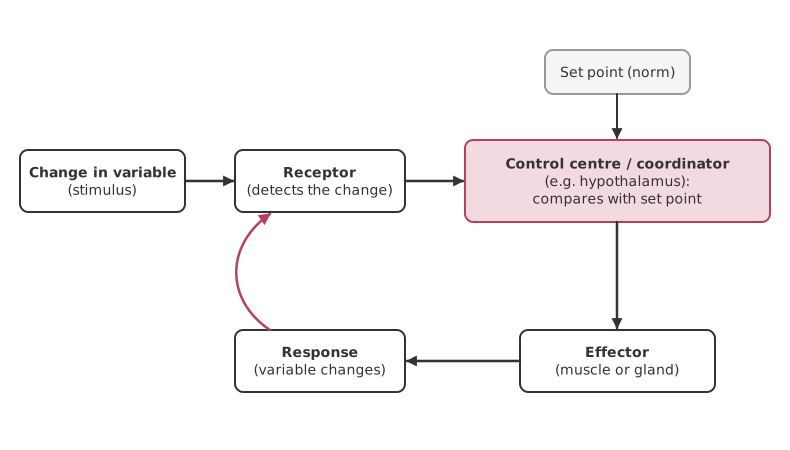
Homeostatic control relies on feedback systems. A feedback system is a control loop in which the result of a response affects the process that caused it.
Every feedback system has the same basic parts:
- Stimulus: a change in a variable away from the set point.
- Receptor: detects the change, for example thermoreceptors in the skin or hypothalamus.
- Control centre (coordinator): compares the information with the set point and decides on a response, for example the hypothalamus or the islets of Langerhans in the pancreas.
- Effector: a muscle or gland that carries out the response.
Sign in free to see the rest of this lesson, the R.E.C.I.P.E. recall steps and the quiz
BrainCake is free. Make an account in seconds and pick up where this page stops.
More in Chemical Control
- Homeostasis
- Negative Feedback
- Positive Feedback
- Chemical Control
- Endocrine Glands
- Hormone Release System
- Pituitary Gland
- Second Messenger System
All 30 lessons in Chemical Control · All Edexcel A-level Biology topics