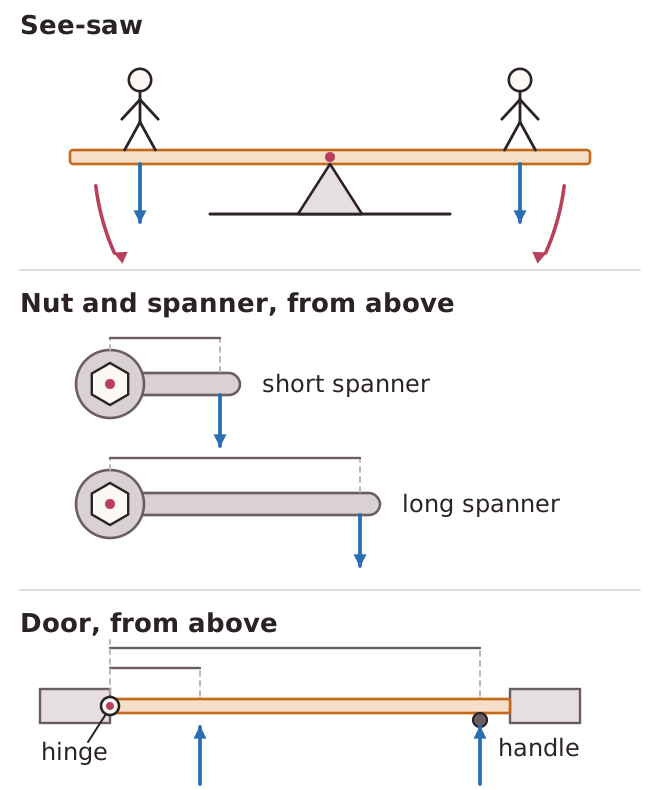
A force can make an object turn about a fixed point called a pivot. Examples are a door turning about its hinges, a nut turning when you push on a spanner, a see-saw turning about its middle, and a crowbar levering up a lid.
The turning effect has a direction. Looking at the object from the front, it is clockwise if it turns the way clock hands move, and anticlockwise if it turns the opposite way. On a see-saw, a downward force on the right of the pivot turns it clockwise, and a downward force on the left turns it anticlockwise. A force acting through the pivot itself has no turning effect.
The turning effect is bigger when the force acts further from the pivot, which is why a longer spanner makes a nut easier to turn, and why a door handle is placed far from the hinges. If an object has both clockwise and anticlockwise turning effects, the resultant turning effect is the overall one. When they are equal the object is balanced and does not turn.