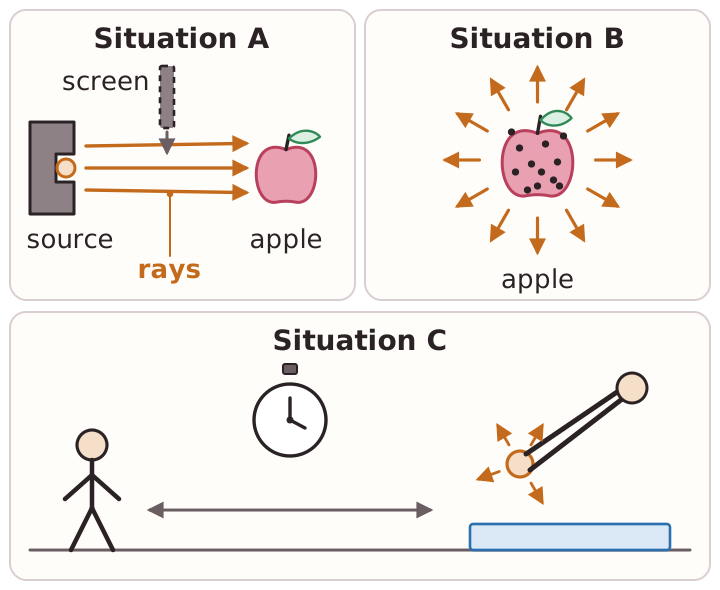
Radioactive contamination is the unwanted presence of materials containing radioactive atoms on other materials. Radioactive atoms might get onto skin, clothes, food or water, or be breathed in or swallowed. The hazard comes from the decay of the contaminating atoms, which keep giving out radiation until they decay or are removed. The type of radiation they emit affects how dangerous they are. For example, an alpha source on the skin is stopped by the skin, but inside the body it is strongly ionising and damages cells.
Irradiation is the process of exposing an object to nuclear radiation from a source. The irradiated object does not become radioactive. The exposure stops when the source is removed or shielded. The hazard of contamination is therefore different: a contaminated object is itself a source of radiation.
Precautions are needed against the hazard from a source used for irradiation. These include holding the source with tongs, keeping the exposure time short, staying as far away as possible and shielding with lead.
Studies into the effects of radiation on humans should be published and shared with other scientists. This lets the findings be checked by peer review, so that people can trust the conclusions.