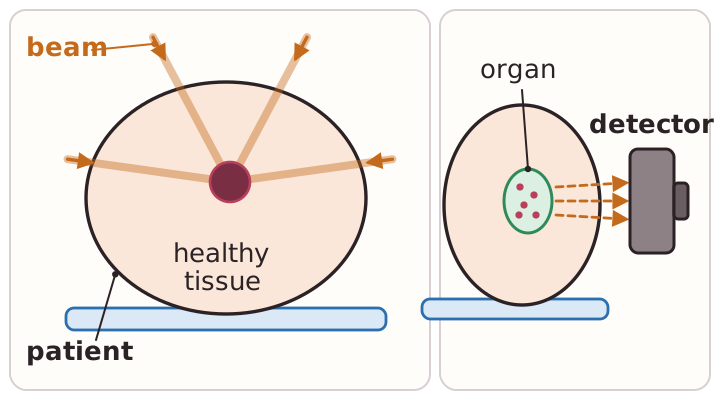
Nuclear radiations are used in medicine in two main ways: to explore internal organs, and to control or destroy unwanted tissue.
To explore internal organs, a tracer is used. This is a radioactive substance that is swallowed or injected. It travels around the body and builds up in a particular organ. It must give out gamma rays, because these pass out of the body and can be picked up by a detector outside. The tracer should have a short half-life, so it does not stay radioactive in the patient for long.
To control or destroy unwanted tissue, such as a tumour, radiation is aimed at the cancer cells. Gamma rays can be directed at the tumour from different directions, so the tumour gets a high dose while healthy tissue gets less. A radioactive source can also be placed inside or next to the tumour. The radiation kills cells, but healthy cells can be damaged too, which causes side effects.
Doctors weigh up the risks against the benefits. The small risk of harm from the radiation is judged against the benefit of finding or treating a serious illness, and is often considered worth taking.