Specialised cells have features, called adaptations, that help them do one job. Sperm and egg cells are gametes and are haploid, which means each nucleus has one set of chromosomes (23 in humans), half the normal number. When a sperm fuses with an egg at fertilisation, the new cell has the full diploid number (46 in humans).
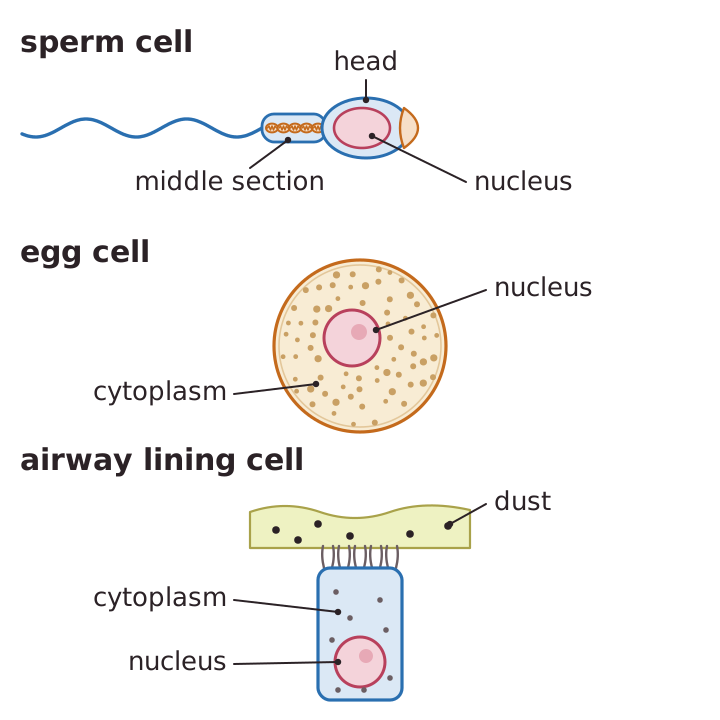
A sperm cell is adapted to reach and fertilise an egg. Its head contains the haploid nucleus and an acrosome, a store of digestive enzymes that break down the outer layer of the egg so the sperm can get in. The middle section is packed with mitochondria, which release the energy for swimming, and the tail whips from side to side to push the sperm along.
An egg cell is adapted to be fertilised and then to feed the early embryo. Its cytoplasm contains nutrients, and it has a haploid nucleus. After a sperm enters, the cell membrane of the egg changes straight away so that no more sperm can get in, which stops the embryo having too many chromosomes.
Ciliated epithelial cells line the airways, such as the trachea. They have cilia, tiny hair-like structures that beat together to move mucus, which traps dust and bacteria, away from the lungs.