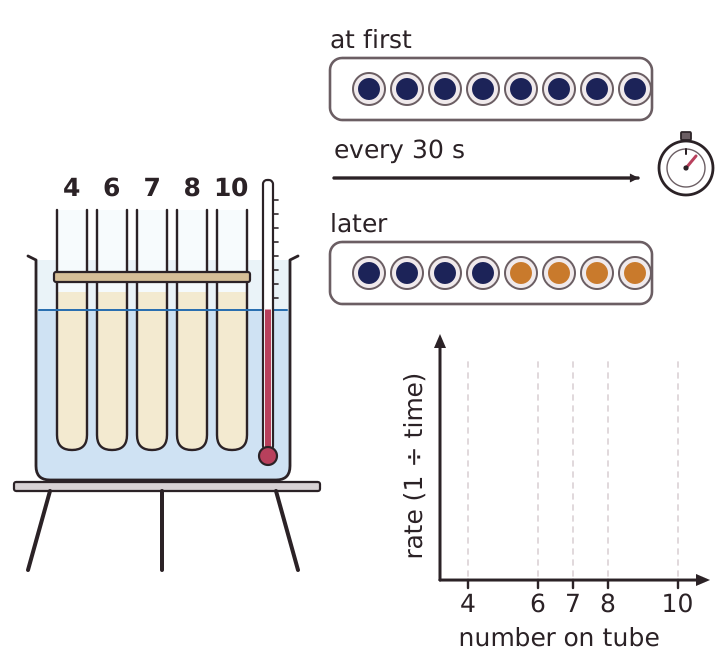
Enzymes work best at one pH, called the optimum pH. Amylase digests starch into sugars. In this practical, mix amylase and starch solution with a buffer solution, which keeps the pH at a set value, and repeat with buffers of different pH, such as pH 4, 6, 7, 8 and 10. Stand the mixtures in a water bath at the same temperature so that only the pH changes.
Every 30 seconds, take a drop of the mixture and add it to a drop of iodine solution on a spotting tile. Iodine is orange-brown, but it turns blue-black while starch is present. When the drop stays orange-brown, all the starch has been digested. Record the time taken. A shorter time means the enzyme works more quickly at that pH. The rate of reaction is 1 ÷ time, so a shorter time gives a higher rate. Repeat each pH, calculate a mean and plot a graph of rate against pH.
Amylase works fastest at about pH 7. At a pH that is much too high or too low, the bonds that hold the enzyme in shape are disrupted, so the shape of the active site changes and the starch no longer fits. The enzyme is then denatured and the reaction slows or stops. The independent variable is the pH, the dependent variable is the time taken for the starch to disappear, and the temperature, the volume of each solution and the concentrations of enzyme and starch are control variables.