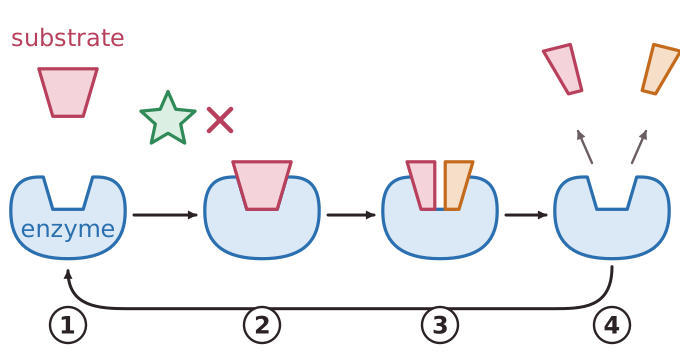
Enzymes are biological catalysts. A catalyst speeds up a chemical reaction but is not used up. Every enzyme is a protein folded into a particular shape, and the reactions in living cells would be far too slow without them.
Part of the enzyme's surface is the active site, a small dip with a very precise shape. The molecule the enzyme works on is the substrate. The substrate collides with the enzyme and fits into the active site, forming an enzyme-substrate complex. The reaction takes place, the products are released, and the enzyme is not used up, so it can catalyse the same reaction again. This is the lock and key model.
Enzymes are specific. The shape of the active site is complementary to the shape of one substrate only, and other molecules do not fit. This is called specificity. It is why the enzyme amylase breaks down starch but cannot break down fats, and why a cell needs many different enzymes.