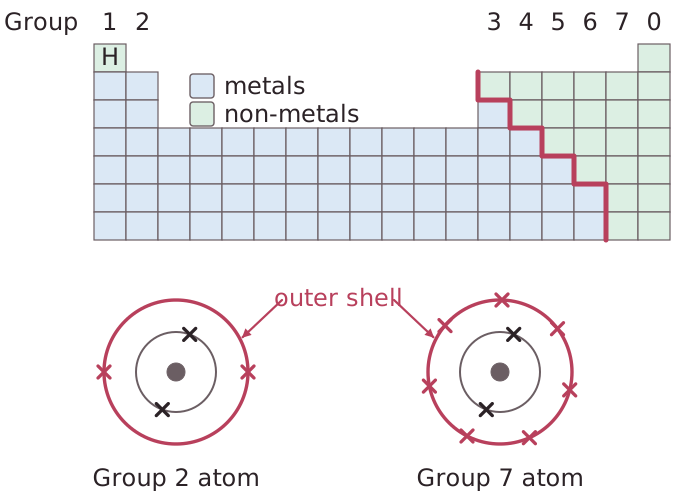
The periodic table can be divided into metals and non-metals. Metals are found on the left and in the centre of the table, and non-metals are found on the right-hand side, with hydrogen being a non-metal too. A stepped line runs down from the top of Group 3 and separates the two types. Most elements are metals.
The division comes from atomic structure. The number of electrons in the outer shell of an atom matches its group number. Metal atoms have a small number of outer electrons, usually one, two or three. They lose these electrons easily to form positive ions. Group 2 elements, for example, have two outer electrons, so they are metals.
Non-metal atoms have outer shells that are nearly full. Group 7 atoms have seven outer electrons. Non-metals tend to gain electrons to form negative ions, or to share electrons in covalent bonds, so that their outer shell becomes full.