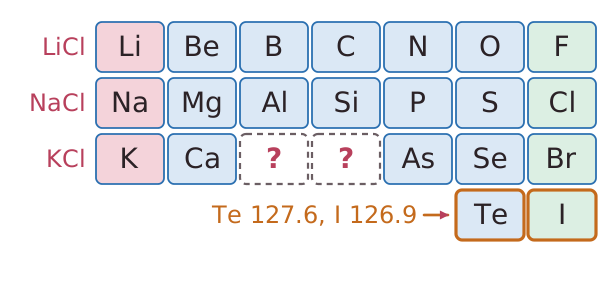
Mendeleev's table was so useful because it could do more than organise known elements. In some places no known element fitted the pattern of properties. Instead of forcing an element into the wrong column, he left gaps in his table. He said that elements to fill these gaps had not yet been discovered.
He then used the elements above and below each gap, and the pattern in their compounds, to predict the properties of the missing element. He called the element missing below silicon eka-silicon, and he gave its expected relative atomic mass, its appearance and the formula of its oxide.
His predictions were soon tested. Gallium, which fills the gap below aluminium, was discovered in 1875. Germanium was discovered in 1886, and its properties closely matched those predicted for eka-silicon. These discoveries gave scientists confidence in his table, and they began to accept it.