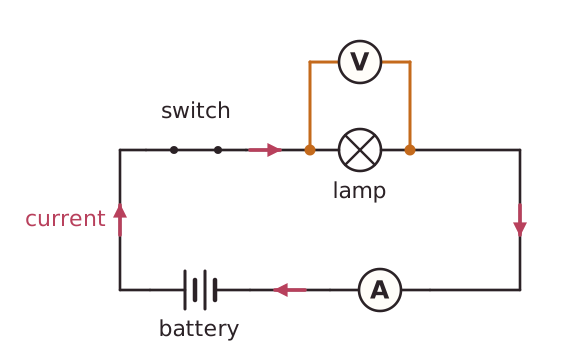
A voltmeter measures the potential difference, also called the voltage, across a component. The unit of potential difference is the volt, V.
A voltmeter is always connected in parallel with the component being tested. It is joined to the two points on either side of the component, so you do not need to break the circuit to fit it. This is different from an ammeter, which is connected in series.
A voltmeter has a very high resistance, so almost no current goes through it. This means it does not change the current in the circuit. If a lamp is connected directly across a 9 V battery, a voltmeter in parallel with the lamp reads 9 V. The circuit does not need to be broken to connect it.