An electric current is the rate of flow of charge. The more charge that passes a point each second, the bigger the current. Charge is measured in coulombs (C) and current in amps (A). A current of 1 amp means that 1 coulomb of charge passes a point every second.
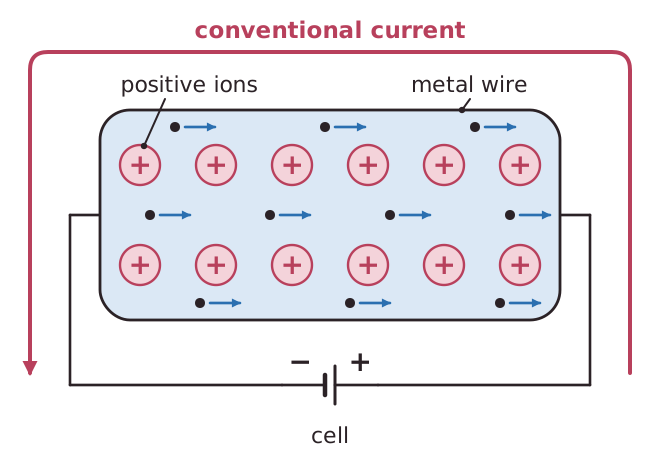
In a metal wire, the charge that moves is carried by electrons. A metal has a regular lattice of positive ions, and some electrons are free to move through it. These electrons have a negative charge. When a cell is connected, the free electrons are all pushed the same way along the wire, and this flow of electrons is the current.
The electrons are not used up as they travel. The same electrons are in the wire all the time, and they keep moving round the circuit. Note that the current is drawn from the positive terminal to the negative terminal of the cell, which is the opposite way to the electrons because they are negative.