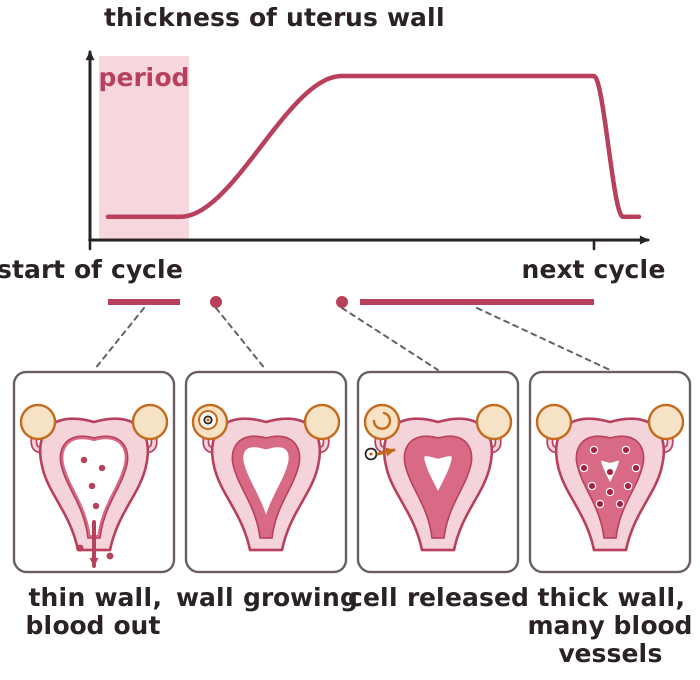
The menstrual cycle is a series of changes in the ovaries and the uterus that repeats about every 28 days. It is controlled by hormones, including oestrogen and progesterone, which are made by the ovaries.
The cycle has these stages. In days 1 to 5 or so, menstruation happens: the lining of the uterus breaks down and passes out through the vagina as a period. From the end of the period until about day 14, oestrogen causes the uterus lining to repair and thicken, and an egg matures in an ovary. Around day 14, ovulation happens, which is when an egg is released from the ovary. From day 14 to day 28, progesterone maintains the thick lining, with plenty of blood vessels, ready for a fertilised egg to implant.
If the egg is not fertilised, the lining breaks down again and the cycle repeats. If the egg is fertilised and implants in the lining, the woman becomes pregnant.