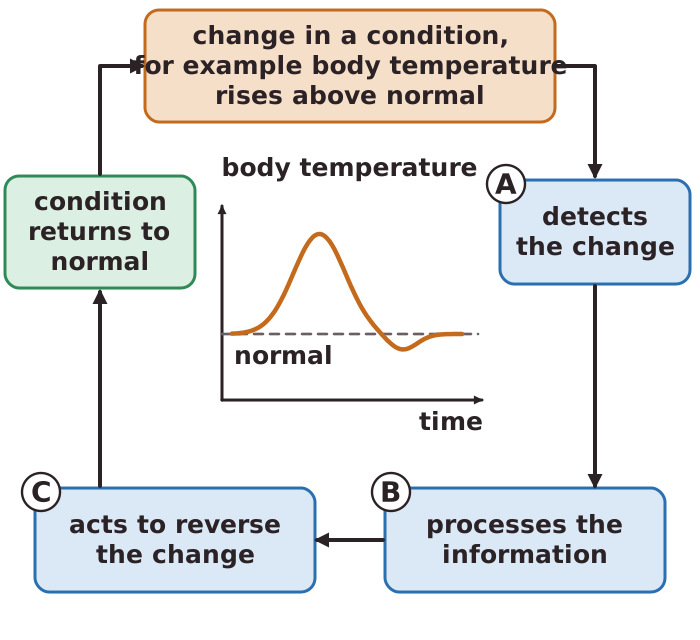
Homeostasis is the regulation of the conditions inside your body so that they stay within narrow limits, even when conditions inside or outside the body change. Examples are body temperature (about 37 °C), blood glucose concentration, water content and ion levels. External changes include a hot day or a cold day. Internal changes include eating a meal, which raises blood glucose, or exercising, which produces heat and uses up water.
Constant conditions matter because cells work best in the right environment. Enzymes control the chemical reactions in cells and each has an optimum temperature and pH. If the body gets too hot, enzymes can be denatured, and reactions slow down or stop. If the water content of the blood is wrong, water moves into or out of cells by osmosis and the cells can swell or shrivel. Cells also need a steady supply of glucose for respiration.
Most control systems use negative feedback. A receptor detects a change, a coordination centre such as the brain or pancreas processes the information, and an effector such as a muscle or gland acts to reverse the change and bring the condition back to normal. In this way the internal environment stays stable.