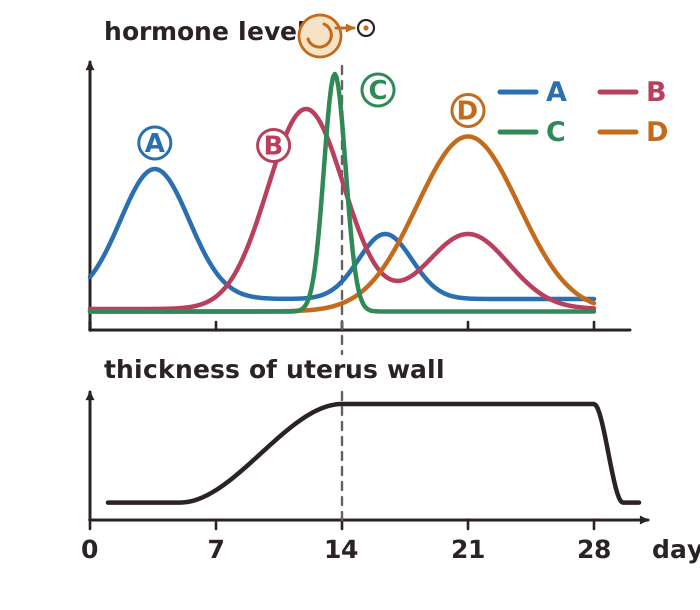
Four hormones control the menstrual cycle. FSH is released by the pituitary gland. It makes an egg mature in the ovary and stimulates the ovaries to make oestrogen. Oestrogen causes the uterus wall to repair and grow thick again after menstruation. When oestrogen is high, it inhibits the release of FSH and stimulates the pituitary to release a surge of LH.
The surge of LH causes ovulation, the release of the egg, around day 14. After ovulation the ovary makes progesterone, and its level rises. Progesterone maintains the thick uterus wall and inhibits the release of FSH and LH, so no more eggs mature while the wall is ready for a pregnancy.
If the egg is not fertilised, the level of progesterone falls. The uterus wall can no longer be maintained, so it breaks down and menstruation begins. The fall in progesterone also lets FSH be released again, and the cycle starts over.