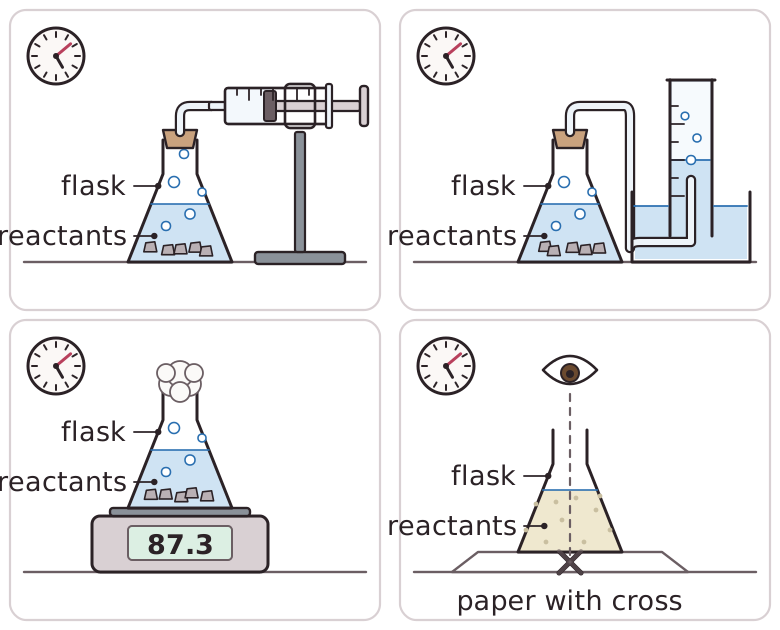
The rate of a reaction is how fast reactants are used up or products are made. To find it you must pick something that changes during the reaction and measure it against time. The method you choose depends on what the reaction does.
If a reaction gives off a gas, you can measure the volume of gas collected, using a gas syringe or an upturned measuring cylinder full of water. Another method is to measure the loss in mass on a balance as the gas escapes. The mass method works well for carbon dioxide. It is not suitable for hydrogen, because its mass is too small to measure reliably.
If a reaction forms an insoluble solid, the solution turns cloudy. You can time how long it takes for a mark under the flask to be hidden. If the reaction has a clear colour change, you can time how long the colour takes to change.
In each case the mean rate is the amount of product formed (or reactant used) divided by the time taken. If a gas syringe collects 60 cm3 in 30 s, the mean rate is 60 ÷ 30 = 2 cm3/s. Taking readings at regular intervals lets you draw a graph and see how the rate changes. A stopwatch is used to measure the time.