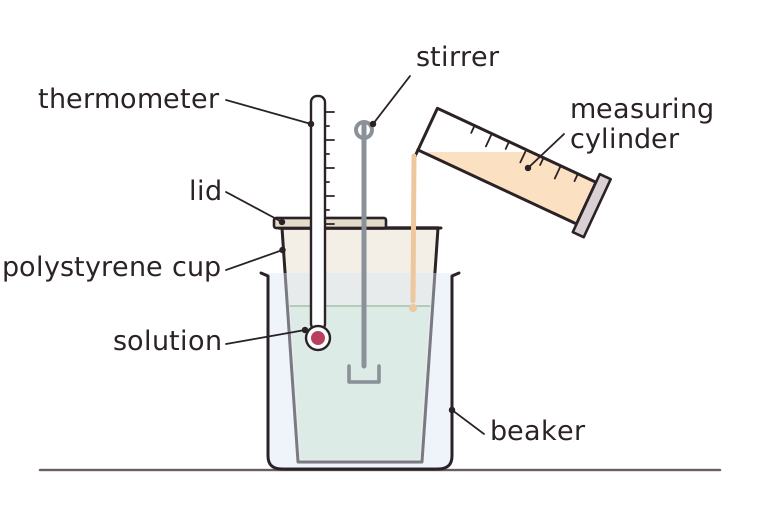
Chemical changes and some physical changes are accompanied by changes in heat energy. When a reaction takes place in solution, the temperature of the solution can be measured before and after, and the temperature change shows the heat change. The temperature change is the difference between the two readings, so a rise from 20 to 27 degrees Celsius is a change of 7 degrees Celsius.
Four common changes involve heat energy changes. Salts dissolving in water: some salts, such as ammonium nitrate, make the water colder, while others, such as anhydrous copper(II) sulfate, make it warmer. Neutralisation reactions between an acid and an alkali make the solution warmer. Displacement reactions, such as zinc added to copper(II) sulfate solution, make the solution warmer. Precipitation reactions also have a heat change that can be measured.
To measure a temperature change, put a known volume of solution in an insulated container such as a polystyrene cup, record the starting temperature, add the second substance, stir and record the highest or lowest temperature reached.