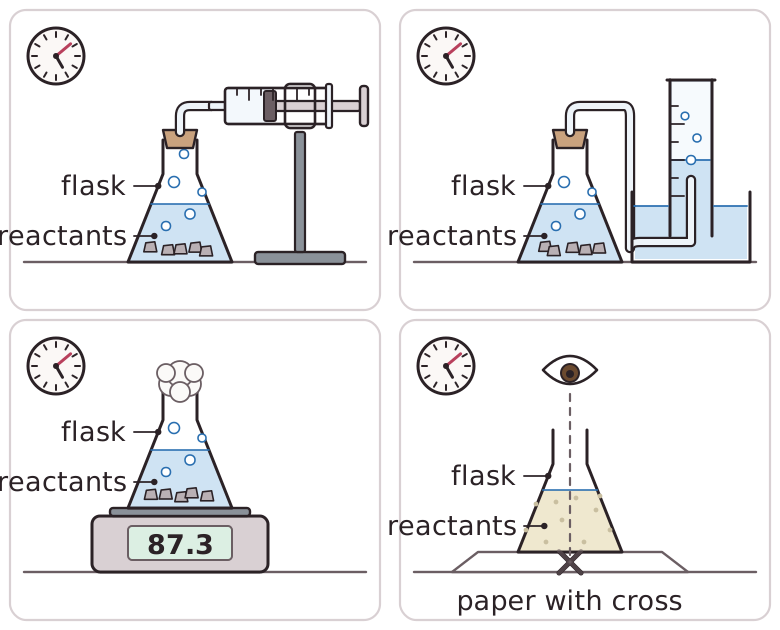
In this core practical you change one condition of a reaction and measure how fast it goes. You can change the concentration of an acid, the temperature, or the size of solid pieces. Everything else must stay the same, so these are the control variables. Only changing one variable at a time makes the test fair.
Part a, measuring the production of a gas. Marble chips (calcium carbonate) react with hydrochloric acid to give carbon dioxide gas: CaCO3 + 2HCl → CaCl2 + H2O + CO2. Add the chips to the acid in a conical flask and quickly fit a bung joined to a gas syringe. Start a stopwatch and read the volume of gas at regular intervals, for example every 10 seconds. A different method is to stand the flask on a balance with a loose cotton wool plug. The mass decreases as carbon dioxide escapes, and the cotton wool stops acid spray from escaping.
Part b, observing a colour change. Sodium thiosulfate solution reacts with hydrochloric acid to make a yellow solid, sulfur, so the solution turns cloudy. Stand the flask on paper marked with a cross. Time how long it takes for the cross to disappear when you look down through the solution. A faster reaction gives a shorter time. The rate is proportional to 1 ÷ time, so a cross that vanishes in 20 s gives 1 ÷ 20 = 0.05 /s. This reaction also makes sulfur dioxide, which is toxic, so work in a well ventilated room.
Plot a graph of volume of gas against time, or compare the times taken. Higher concentration, higher temperature and smaller solid pieces all give a faster reaction.