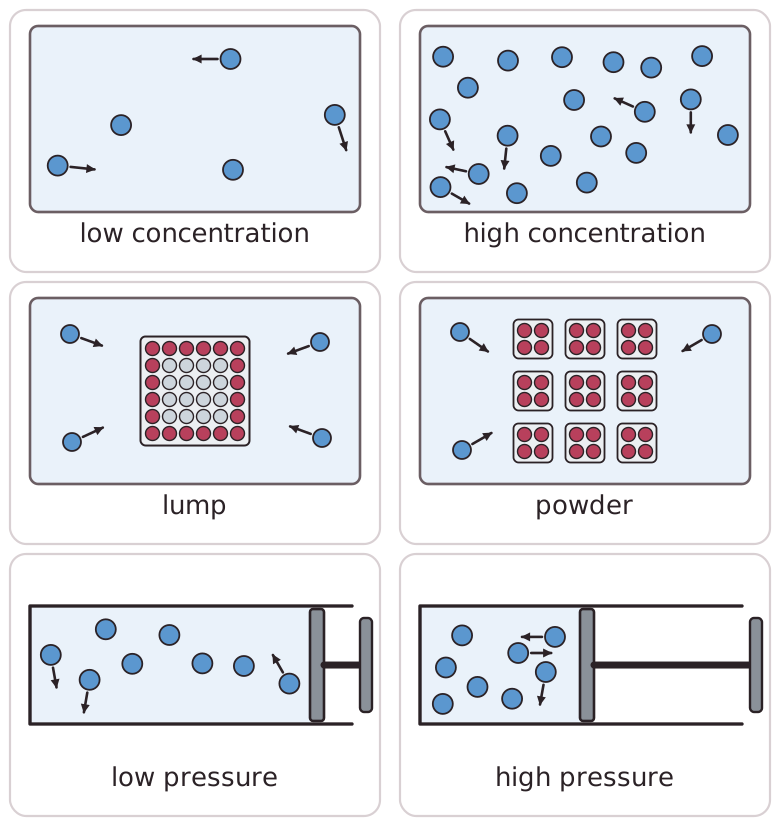
Four things change the rate of a reaction, and each one works by changing the frequency of collisions, the energy of collisions, or both.
Temperature. At a higher temperature the particles move faster. They collide more often, and each collision has more energy. A bigger fraction of collisions have the activation energy or more, so the rate increases. This is the only one of the four that changes the energy of collisions.
Concentration (of a solution). A higher concentration means there are more particles in the same volume. The particles are closer together, so they collide more often. Pressure (of a gas) works the same way. A higher pressure squeezes the gas particles into a smaller space, so the frequency of collisions increases.
Surface area to volume ratio of a solid. Only the particles on the outside of a solid can be hit by other particles. Breaking a lump into smaller pieces, or powder, gives a larger surface area to volume ratio. More particles are exposed, so collisions happen more often and the rate increases.