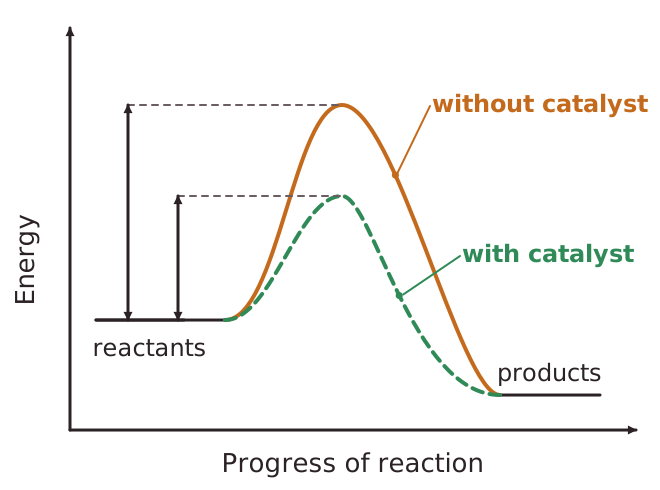
For a reaction to happen, colliding particles must have at least a minimum amount of energy. This minimum energy is called the activation energy. Many collisions between particles do not lead to a reaction because the particles do not have enough energy.
A catalyst provides an alternative reaction pathway that has a lower activation energy. The reactants still turn into the same products, but the energy barrier to be crossed is smaller.
With a lower activation energy, a larger proportion of the collisions have enough energy to react. More collisions are successful each second, so the rate of reaction increases. The catalyst does not give the particles extra energy and it is not used up.