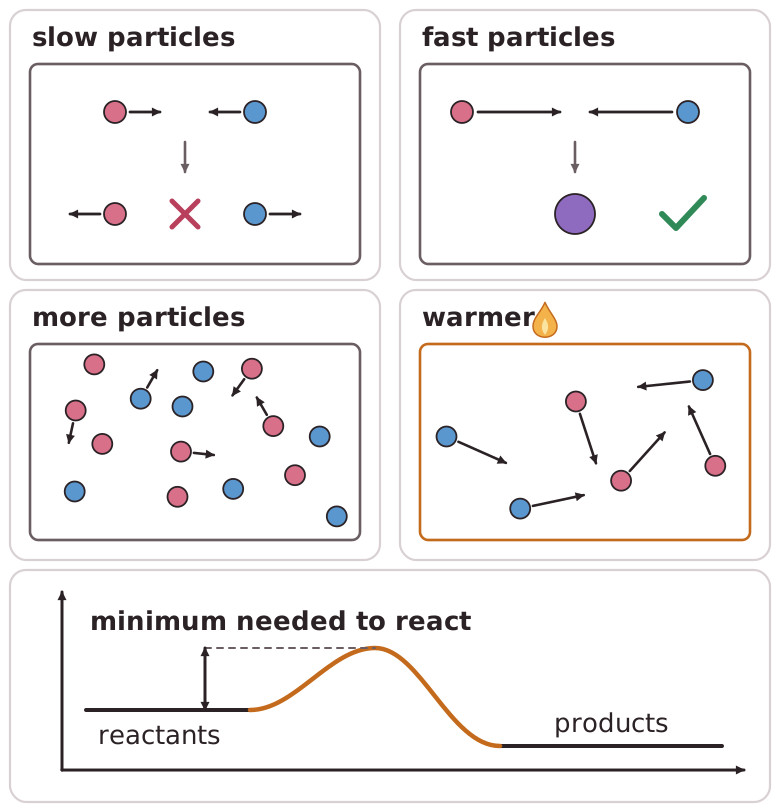
Chemical reactions happen when particles collide with each other. Reactant particles are always moving, and they bump into one another. Most collisions do nothing, because the particles bounce apart.
A collision only leads to a reaction if the particles hit with enough energy. The smallest amount of energy needed is called the activation energy. A collision that has at least this energy and causes a reaction is a successful collision.
The rate of a reaction depends on the number of successful collisions in each second. There are two ways to increase it. One is to increase the frequency of collisions, so that the particles collide more often. The other is to increase the energy of the collisions, so that a bigger fraction of them have the activation energy or more.
If the number of successful collisions per second is doubled, the rate of reaction is doubled.