 BRAINCAKE
The Delocalised Model of Benzene
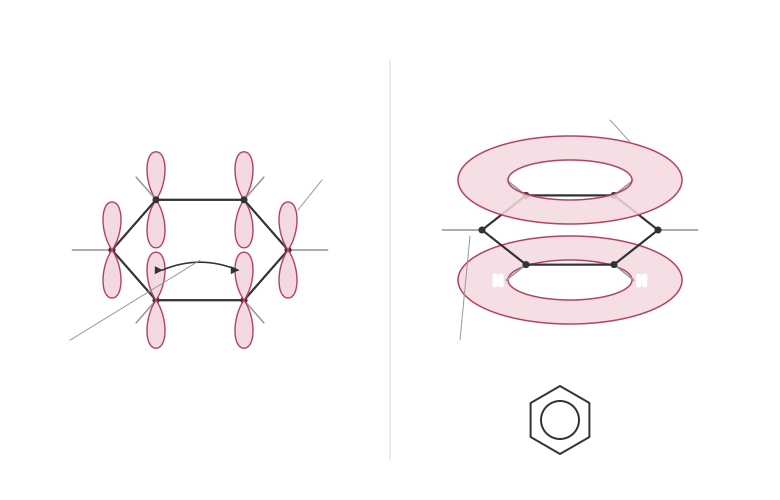
In the delocalised model, each of the six carbon atoms in benzene uses three of its four outer electrons to form σ bonds: two to neighbouring carbon atoms and one to a hydrogen atom. These σ bonds lie in one plane at 120° to each other, so the molecule is planar.
The fourth electron of each carbon is in a p orbital, which sticks out above and below the plane of the ring. Each p orbital overlaps sideways with the p orbitals on both neighbouring carbons, not just one. This forms a continuous π system: rings of electron density above and below the plane of the carbon atoms.
Sign in free to see the rest of this lesson, the R.E.C.I.P.E. recall steps and the quiz
BrainCake is free. Make an account in seconds and pick up where this page stops.
More in Arenes
- Benzene
- The Kekulé Model
- Evidence for Delocalisation
- Combustion of Benzene
- Electrophilic Substitution
- Bromination of Benzene
- Nitration of Benzene
- Friedel-Crafts Alkylation
All 13 lessons in Arenes · All Edexcel A-level Chemistry topics