 BRAINCAKE
Electrophilic Substitution
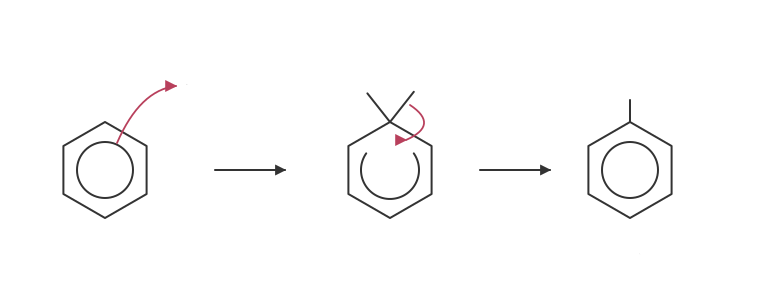
Benzene has a high electron density in its ring of delocalised π electrons, so it is attacked by electrophiles: electron-pair acceptors, usually positive ions such as NO2+ or Br+. Unlike alkenes, however, benzene reacts by substitution, not addition: the electrophile replaces one hydrogen atom on the ring. Substitution keeps the stable delocalised system, whereas addition would destroy it.
Because benzene is so stable, a strong electrophile is needed, and it usually has to be generated using a catalyst.
General mechanism (electrophile E+):
Sign in free to see the rest of this lesson, the R.E.C.I.P.E. recall steps and the quiz
BrainCake is free. Make an account in seconds and pick up where this page stops.
More in Arenes
- The Kekulé Model
- The Delocalised Model of Benzene
- Evidence for Delocalisation
- Combustion of Benzene
- Bromination of Benzene
- Nitration of Benzene
- Friedel-Crafts Alkylation
- Friedel-Crafts Acylation
All 13 lessons in Arenes · All Edexcel A-level Chemistry topics