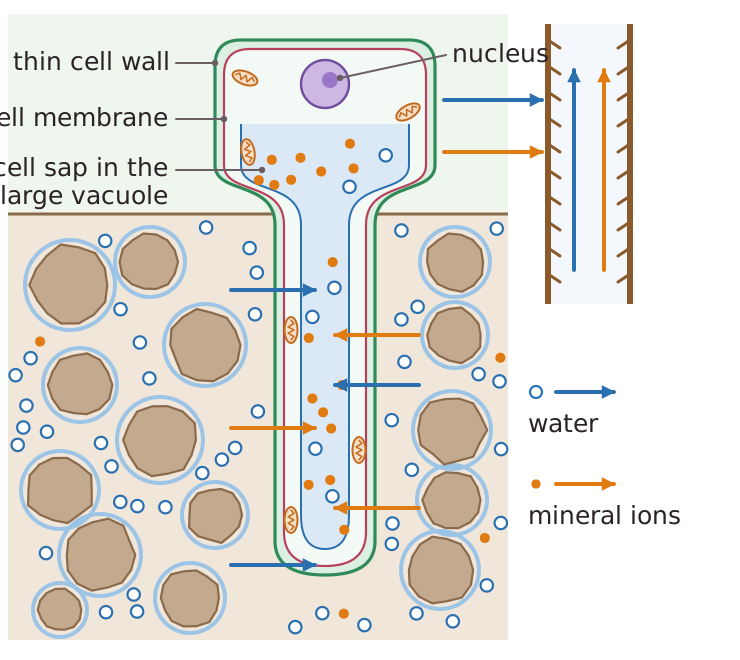
Plants take in water and mineral ions from the soil through their roots. The surface of a root is covered in root hair cells. Each has a long, thin extension that reaches between soil particles. This gives a very large surface area, so more water and ions can be absorbed. The cell wall is thin, so substances have only a short distance to travel.
Water enters by osmosis. Soil water is dilute, so it has a higher concentration of water than the cell sap inside the root hair cell. Water therefore moves into the cell through the partially permeable membrane, down its concentration gradient.
Mineral ions such as nitrate are usually at a lower concentration in the soil than inside the cell, so they cannot enter by diffusion. Instead they are taken up by active transport, which moves them against the concentration gradient and needs energy from respiration. Root hair cells have many mitochondria, which release this energy. Root hair cells are adapted in this way to take up water and ions quickly, and both then pass on into the xylem.