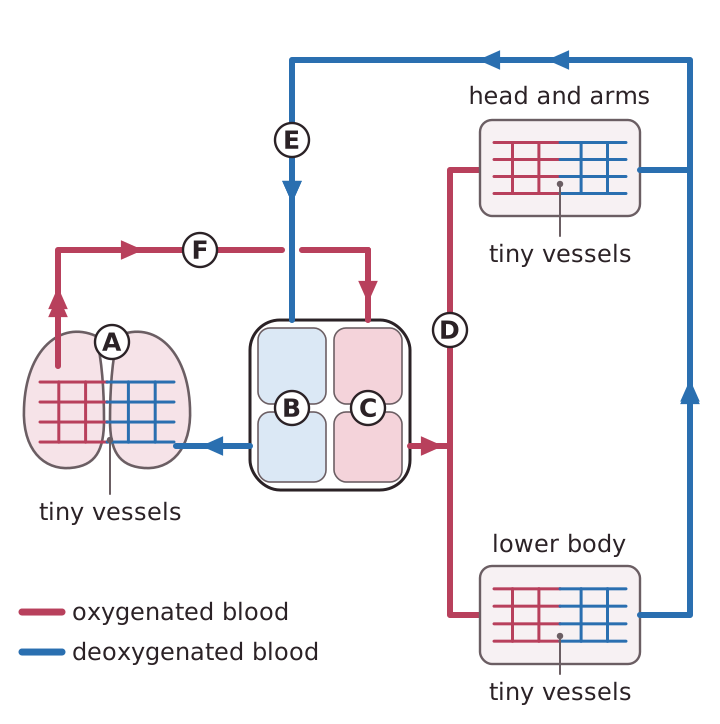
The human circulatory system is a transport system made of the heart, blood vessels and blood. It carries oxygen from the lungs to the body cells and carbon dioxide back to the lungs, so it works closely with the gaseous exchange system. Blood flows through three types of vessel. Arteries carry blood away from the heart, veins carry blood towards the heart, and capillaries are tiny vessels that link arteries to veins and exchange substances with the cells.
Mammals have a double circulatory system, so the blood passes through the heart twice in each complete circuit of the body. In the first circuit the right side of the heart pumps deoxygenated blood to the lungs. There the blood picks up oxygen and gives up carbon dioxide, and it returns to the left side of the heart. In the second circuit the left side pumps oxygenated blood to the rest of the body, and deoxygenated blood returns to the right side.
Two circuits are needed because blood loses pressure as it squeezes through the many tiny capillaries in the lungs. Returning it to the heart lets it be pumped again to a high pressure, so oxygen and glucose reach the body cells faster. This matters for mammals, which have a high demand for energy to stay active and keep a constant body temperature.