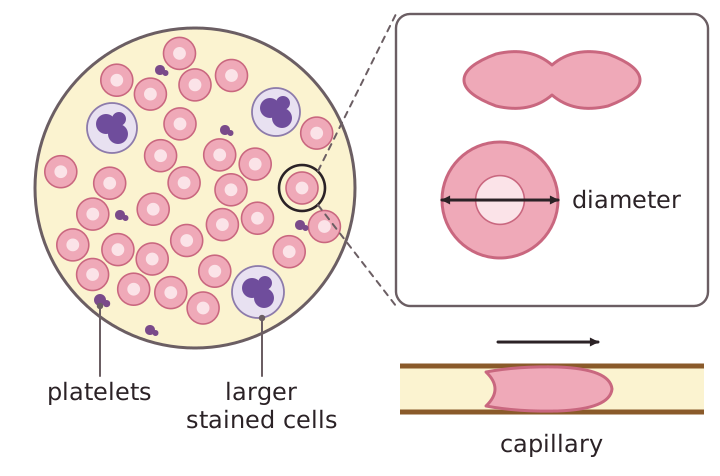
Blood is a tissue made of plasma, red blood cells, white blood cells and platelets. In a blood smear viewed under a light microscope, the red blood cells are by far the most numerous. They look like small round discs with a pale centre and no nucleus. The white blood cells are larger and fewer, and have a stained nucleus. Platelets are tiny cell fragments that help the blood to clot.
Red blood cells carry oxygen. They are packed with haemoglobin, a red protein that binds to oxygen in the lungs to form oxyhaemoglobin and releases it in the tissues. Having no nucleus leaves more room for haemoglobin. The biconcave disc shape gives a large surface area for absorbing oxygen and a short distance for it to reach the haemoglobin. The cells are also flexible, so they can squeeze through narrow capillaries.
Plasma is the pale yellow liquid part of the blood, and it is mostly water. It transports many dissolved substances: glucose and amino acids from the gut to the cells, carbon dioxide from the cells to the lungs, urea from the liver to the kidneys, hormones, and mineral ions. It also carries heat around the body.