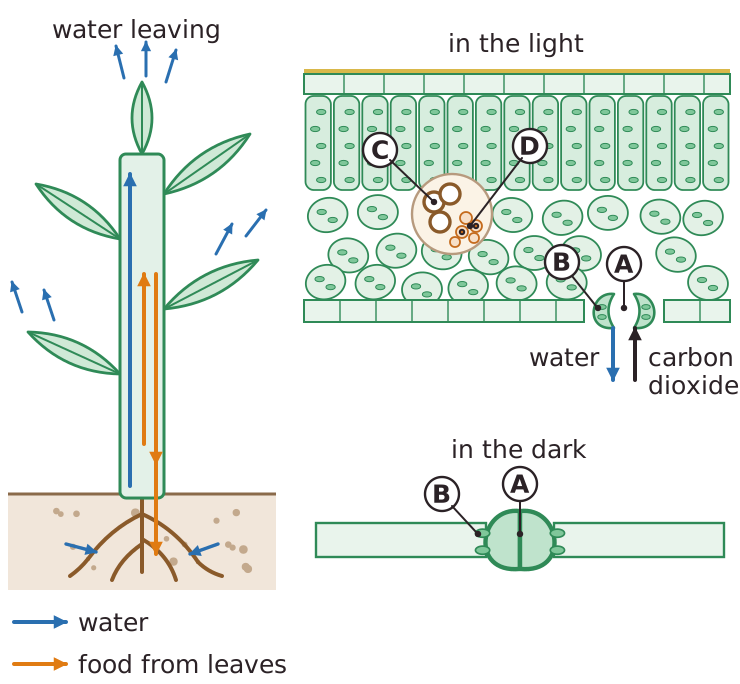
Transpiration is the loss of water vapour from the leaves of a plant. Water evaporates from the surfaces of the cells inside the leaf, then the vapour diffuses out through tiny holes called stomata. As water leaves, more water is pulled up through the xylem from the roots, so there is a continuous flow of water through the plant called the transpiration stream.
Each stoma is surrounded by two guard cells. The guard cells change shape to open and close the stoma. Stomata are usually open in the light, which lets carbon dioxide in for photosynthesis, and closed in the dark or when the plant is short of water, which cuts water loss. Most stomata are on the underside of the leaf, where it is cooler.
Translocation is the movement of dissolved sugars, mainly sucrose, from the leaves where they are made to the parts of the plant that use or store them, such as growing shoots, roots and fruits. It happens in the phloem, and the sugars can travel up or down the plant.
To measure stomatal density, paint a patch of clear nail varnish on the leaf, peel it off when dry and view the impression under a light microscope. Count the stomata in the field of view and divide by the area of the field of view.